

MATERIA
The Grammar of the Kitchen
Materia culinaria is the study of what cooking is made of; not just ingredients, but the ideas and techniques that transform them. Every dish begins with raw material, but it is shaped by action: by heat, by movement, by time, by the instruments we choose to use. A flame can deepen sweetness, a blade can redefine texture, fermentation can unlock entirely new dimensions of flavor. In this way, ingredients, techniques and instruments are inseparable — they form a single, evolving vocabulary.
This section is our atlas of culinary grammar. A place to explore the archive on how flavor is built, how texture is engineered, and how technique gives intention to every decision in the kitchen. Materia invites you to look closer, think deeper, and cook ingredients with respect, knowledge and awareness.
Search by Category, Cuisine, Technique, Flavor, Ingredient, Texture, etc.

Empanadas & Bao: The Dialect of Pockets
One is golden and fried; the other is white and steamed. A study on the "Pocket Dialect" of street food, featuring 9 ways to bridge Latin America and Asia through dough.

The Art of Infused Oils: Liquid Memory & Flavor Shortcuts
Infused oils are bottled memories. A guide to the safety and technique of oil infusion, featuring 6 fusion formulations to build your global flavor library.

The Fusion Bowl: Architecture of Crunch & Color
A good bowl is not an accumulation; it is an architecture. A guide to mastering the 5 layers of texture, featuring 12 fusion formulations that bridge Japan, Korea, and Cambodia.

The Art of Infused Spirits: Building a Liquid Library
Infusion is culinary alchemy. A guide to transforming vodka, rum, and gin into flavored elixirs. Features 5 fusion formulations that work in both the cocktail shaker and the kitchen.

The Atlas of Flavor & Texture
Fusion is not a trend; it is a dialogue. An atlas mapping the four coordinates of cooking—Flavor, Texture, Aroma, and Process—featuring the 13 principles of culinary discovery.

The Architecture of Spice: Layering Like an Alchemist
To layer spices is to compose with time, temperature, and intuition. A guide to the 5 principles of the Mediterranean alchemist, teaching you how to build flavor in waves.
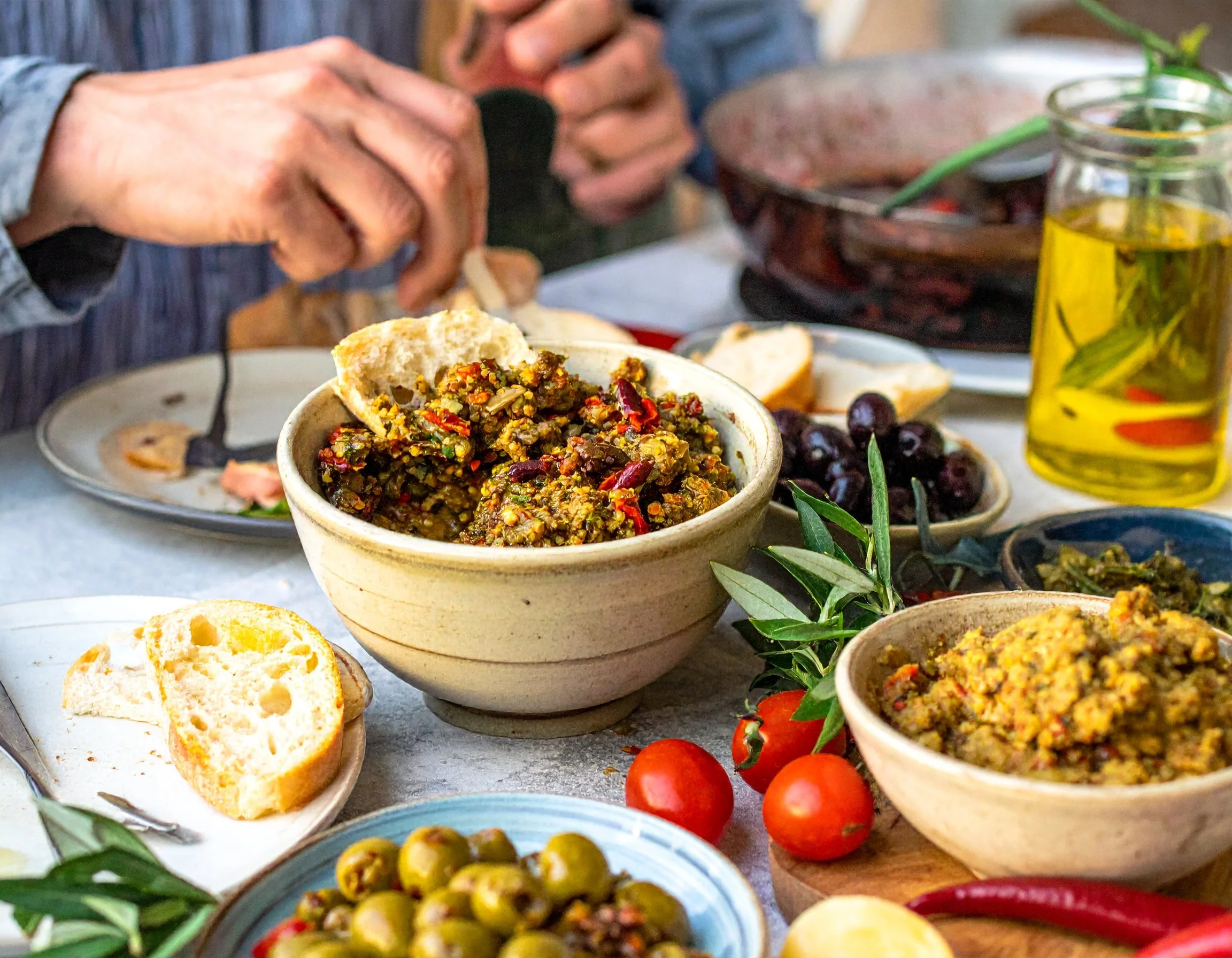
The Architecture of Tapenade: Olives, Chiles & Global Aromatics
At its heart, a tapenade is a concentrated flavor engine. Learn the architecture of the Mediterranean olive paste and how to adapt it using global chiles and aromatics.