Salt-Based Condiments — 23 Departure Points for Preservation, Fermentation, and Flavor
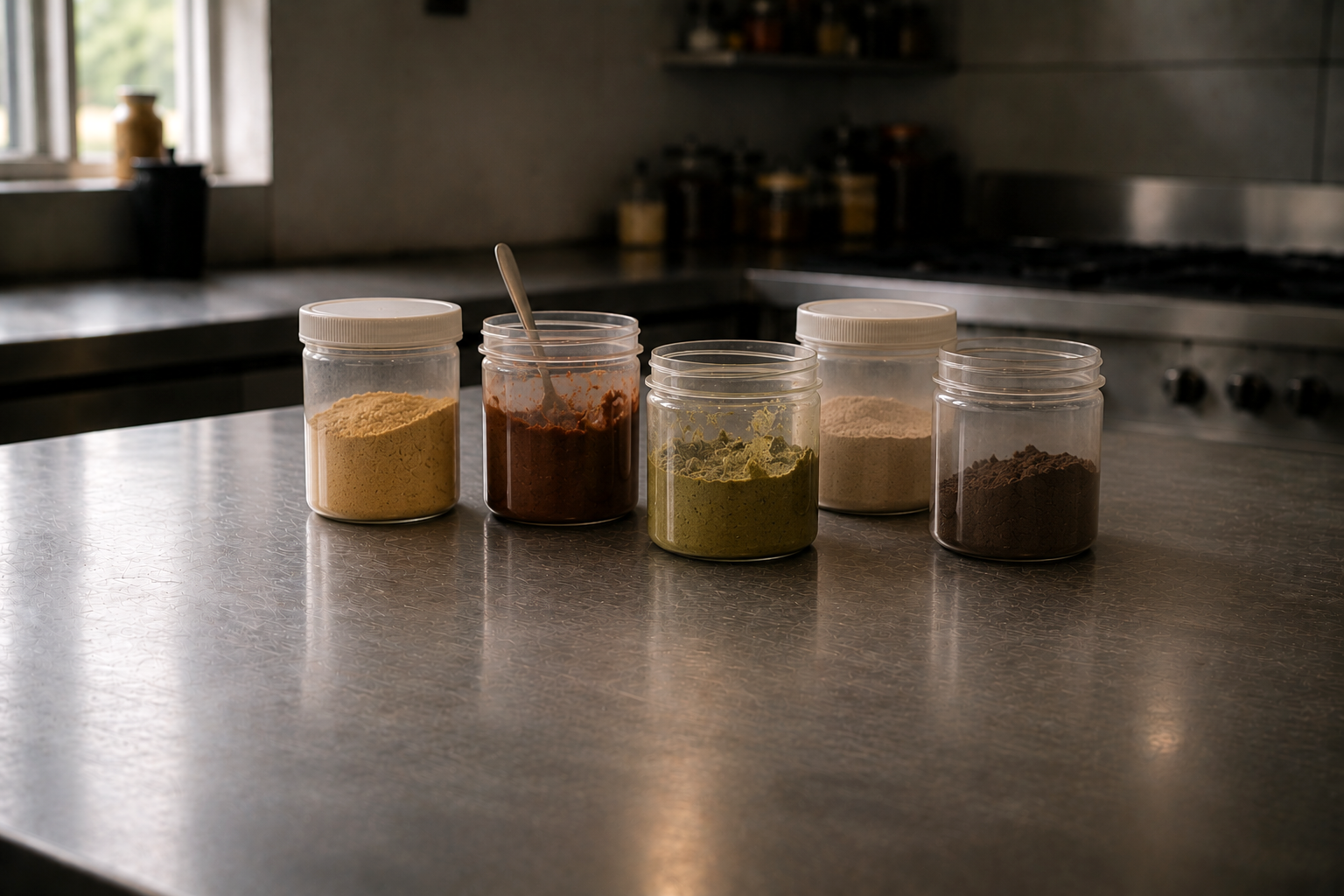
Salt is one of the oldest culinary technologies. Before refrigeration, before industrial preservation, before modern packaging, salt allowed cooks to hold flavor in place: fish, herbs, fruits, garlic, vegetables, seeds, and animal proteins could be preserved, transformed, and carried across seasons.
But salt does more than prevent spoilage. It extracts moisture, concentrates flavor, encourages fermentation, sharpens acidity, and creates depth. In many cultures, salt-based condiments became more than practical preservation systems; they became essential flavor engines. A spoon of miso, a touch of anchovy paste, a fragment of preserved lemon, or a small amount of fermented shrimp paste can change the entire direction of a dish.
This article gathers 23 salt-based condiments from around the world, organized into clusters so we can see how salt behaves across cultures: as preservative, fermenting agent, umami builder, acid partner, and seasoning base.
Departure Points is a Materia series built around creative exploration. Each article gathers 23 known or traditionally used applications of an ingredient, technique, region, or culinary material, then organizes them into clusters so cooks can see patterns, possibilities, and relationships. Each point of departure is a catapult for further inquiry: a reference, a context, and a question to carry back into the kitchen. What does this material do? How has it been used before? What changes when we alter the medium, the technique, the temperature, or the cultural context? From there, the work begins.
Cluster I: Salt and Fermentation as Umami Builders
In these condiments, salt creates the conditions for fermentation. Microbial activity transforms proteins, legumes, or seafood into deep savory systems. These preparations are powerful, often used in small amounts, and capable of anchoring an entire dish.
1. Miso (Japan)
Miso is a fermented paste made with soybeans, salt, koji, and sometimes rice or barley. It brings umami, sweetness, salinity, and body to soups, marinades, dressings, glazes, and sauces.
2. Doenjang (Korea)
Doenjang is a Korean fermented soybean paste with a more rustic, earthy, and funky profile than many Japanese misos. It is used in stews, dipping sauces, vegetable preparations, and seasoning bases.
3. Garum / Fish Sauce Traditions
Ancient Roman garum and many Southeast Asian fish sauces share the principle of salt-fermenting fish into a deeply savory liquid. These condiments bring salinity, umami, and aromatic depth to sauces, broths, dressings, and marinades.
4. Saeujeot (Korea)
Saeujeot is made from tiny shrimp fermented with salt. It is used in kimchi, stews, and seasoning pastes, where it contributes salinity, seafood aroma, and fermented complexity.
5. Ngapi (Myanmar)
Ngapi is a fermented fish or shrimp paste made with salt. It is pungent, concentrated, and central to many Burmese dishes, often used to season relishes, soups, and vegetable preparations.
6. Bagoong (Philippines)
Bagoong is a fermented fish or shrimp condiment used across Filipino cooking. It can be salty, pungent, savory, and slightly sweet depending on preparation, often paired with rice, vegetables, stews, or fruit.
7. Belacan / Shrimp Paste (Malaysia and Southeast Asia)
Belacan is a fermented shrimp paste, usually toasted before use to deepen its aroma. It is essential in sambals, curries, stir-fries, and dipping sauces, where it gives intensity and marine umami.
Cluster II: Salted Fish, Anchovies, and Marine Condiments
These condiments concentrate the sea through salt. They are often intense, but when used carefully they disappear into sauces, dressings, and cooked bases, leaving behind depth rather than obvious fish flavor.
8. Anchovy Paste (Italy / UK)
Anchovy paste is made from salted anchovies, often mashed with oil. It is used in sauces, dressings, stews, and spreads, where it brings savory intensity and helps build depth.
9. Pissalat (Nice, France)
Pissalat is a traditional anchovy-based condiment associated with Nice, often made with anchovies, herbs, and olive oil. It can season breads, vegetables, sauces, and Mediterranean preparations.
10. Shito (Ghana)
Shito is a Ghanaian condiment made with chiles, dried fish or shrimp, oil, salt, and spices. It is deep, spicy, savory, and often served with rice, grilled foods, eggs, or fried dishes.
11. Hákarl (Iceland)
Hákarl is fermented shark, traditionally preserved and aged through a long process. It is an extreme example of salt, fermentation, and time transforming a difficult raw material into a culturally significant food.
Cluster III: Salted Fruits, Citrus, and Acidic Condiments
Salt and acidity are powerful partners. In these preparations, salt softens fruit, concentrates aroma, and creates condiments that can brighten stews, sauces, grains, and grilled foods.
12. Umeboshi (Japan)
Umeboshi are salted and fermented Japanese ume plums. They are intensely sour, salty, and aromatic, used with rice, in dressings, sauces, pickles, and small seasoning applications.
13. Preserved Lemons (North Africa)
Preserved lemons are made by packing lemons in salt until they soften and ferment. They bring acidity, bitterness, salinity, and floral citrus depth to tagines, dressings, marinades, grain dishes, and sauces.
14. Lemon-Salt Herb Mix (Iran and Regional Variations)
Salted herb and citrus mixtures appear in different regional contexts. Dried herbs, salt, and citrus peel can create a seasoning base that adds brightness, aroma, and preservation logic to soups, stews, grains, or grilled foods.
15. Coffee-Pairing Note: Salted Citrus as a Bridge
Salted citrus condiments, such as preserved lemon or lemon-salt herb mixtures, can also act as bridges to bitter ingredients. Their acidity and salinity can balance coffee, cacao, roasted vegetables, or smoked dishes.
Cluster IV: Salt-Preserved Herbs, Garlic, and Vegetable Bases
These condiments show salt as a way to preserve fresh plant material. Herbs, garlic, turnips, eggplant, or vegetables can be held in salt, then used as concentrated seasoning bases throughout the year.
16. Fermented Garlic in Salt (Québec / France and Related Traditions)
Garlic can be lacto-fermented or preserved in salt to create a pungent, concentrated paste. Used in small amounts, it seasons soups, sauces, vinaigrettes, braises, and roasted vegetables.
17. Salmuera de Ajo (Argentina)
Salmuera de ajo is a garlic and herb brine used especially for grilled meats. Salt water carries garlic and aromatics into the dish, functioning as both seasoning and moisture support.
18. Salt-Preserved Herbs (France and Other Regions)
Herbs can be preserved in salt to extend their use across seasons. These mixtures are useful in soups, stews, roasted vegetables, sauces, and marinades. This category may need precise regional naming depending on the final version.
19. Majado / Salted Herb-Garlic Condiment (Canary Islands, working terminology)
A salted mixture of herbs, garlic, and oil can function as a concentrated seasoning paste. If using this example for publication, the exact name should be verified, but the culinary principle is strong: salt preserves aromatics and turns them into a ready-to-use flavor base.
20. Salted Turnips (China)
Salted or fermented turnips are used in Chinese cooking, often shredded or chopped for stir-fries, congee, soups, or savory fillings. They bring crunch, salinity, and fermented vegetable depth.
21. Ajvar with Salted Eggplant / Roasted Vegetable Preserves (Balkans)
Ajvar is typically made from roasted peppers and sometimes eggplant, with salt playing a key role in preservation and seasoning. In some variations, salted or aged vegetables deepen the condiment’s flavor and texture.
Cluster V: Salted Spice Pastes and Seasoning Systems
These condiments combine salt with spices, aromatics, oils, or fermented elements. They function as ready-made flavor systems, designed to be spooned into a dish and immediately give structure.
22. Chermoula (Morocco and North Africa)
Chermoula is an herb, garlic, spice, and acid-based condiment often used for fish, vegetables, and grilled foods. When preserved lemon or salt-heavy components are included, it becomes a bright, saline seasoning system.
23. Tabil / Salted Spice Paste Variations (Tunisia and North Africa)
Tabil is often known as a Tunisian spice blend, but related moist or paste-like seasoning systems may include garlic, salt, and spices. This example should be refined depending on the exact regional reference, but it points to an important category: salt as a carrier for spice and aroma.
What Salt-Based INGREDIents Teach the Cook
Salt-based condiments teach us that salt is not only a seasoning. It is a method, a preservative, a fermenting force, and a way to concentrate culinary memory.
Across these 23 departure points, salt appears in several roles:
as a preservative
as a fermentation regulator
as a carrier for herbs and aromatics
as a partner to acid
as an umami intensifier
as a way to transform seafood, legumes, fruits, and vegetables
as a base for condiments that last beyond the season
The creative lesson is clear: salt does not simply make food salty. Used with care, it changes the nature of the ingredient itself.
Creative Exploration Prompt
Choose one ingredient: garlic, lemon, herbs, shrimp, mushrooms, or turnips. Preserve it with salt in one of three ways: brine, dry salt, or paste.
Document the transformation:
What happens to texture?
Does the aroma become sharper, softer, or deeper?
Does the salt extract liquid?
Does fermentation begin?
How little of the final condiment is needed to season a dish?
From there, the work begins.