The Siphon
The Instrument of Pressure, Foam, and Instant Infusion
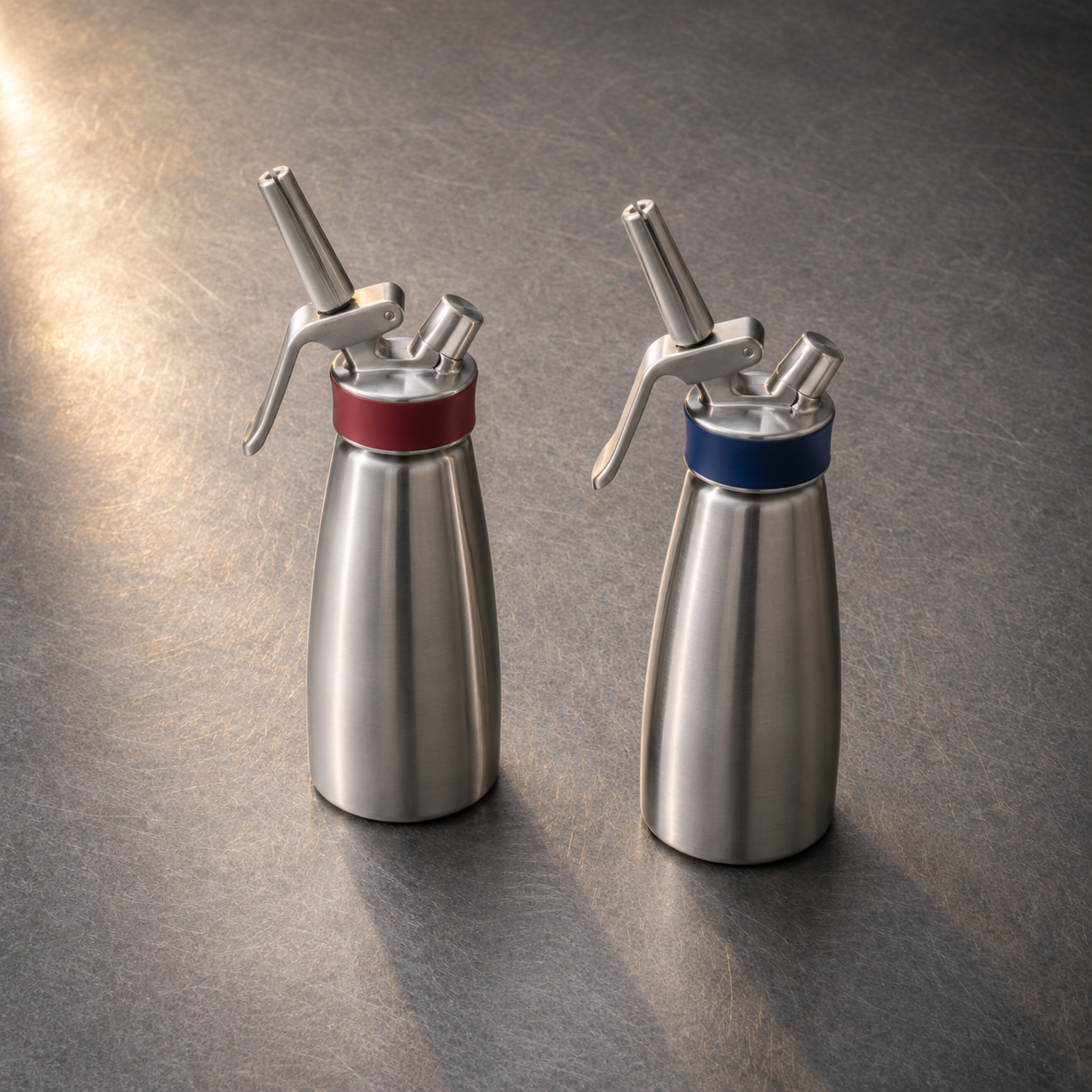
The siphon is one of the most versatile modern instruments in the kitchen. At first glance, it appears to be a container with a nozzle. In practice, it is a pressure chamber. Inside the siphon, gas enters a liquid preparation and changes how that preparation behaves when released. Cream becomes whipped. A sauce becomes foam. A liquid can be infused rapidly. A drink can become carbonated.
The siphon allows cooks to work with texture, air, pressure, and speed. It is not simply a tool for decoration. Used correctly, it can change the structure of a preparation and open possibilities that would be difficult to achieve by hand. But the siphon is also an instrument that requires discipline. It has limits, rules, and a learning curve.
Function
The siphon uses gas pressure to transform or dispense preparations.
Its main functions include:
• producing whipped creams
• creating savory or sweet foams
• aerating sauces and purées
• rapidly infusing liquids with herbs, spices, or aromatics
• carbonating beverages or liquids, when using the proper siphon and gas
• dispensing preparations with controlled pressure
The result depends on the preparation, the gas used, the temperature, the thickness of the liquid, and the nozzle. This is why siphon work requires testing. A preparation may appear correct in the bowl but fail once charged. It may be too thick to dispense, too thin to hold structure, or unstable once released.
Geometry
The siphon is built around several key components.
Pressure Chamber
The body of the siphon holds the preparation and receives the gas charge.
Some siphons are designed only for cold preparations, while others are rated for hot use. This distinction matters. A siphon used for hot foams or warm sauces must be built to tolerate heat and pressure safely.
Head and Valve System
The head contains the dispensing mechanism.
This is where the gas, liquid, and pressure meet the release valve. If the head is blocked, dirty, damaged, or improperly assembled, the siphon may fail to dispense correctly.
Nozzles and Tips
Different tips produce different effects.
A narrow tip may create a more precise line or small foam application. A wider decorative tip may produce whipped cream, mousse-like textures, or larger foam volumes.
The tip must match the preparation. A thick purée may clog a fine nozzle, while a thin liquid may dispense too quickly or collapse immediately.
Fill Line
Most siphons include a maximum fill line.
This line matters because gas needs space inside the chamber. Overfilling the siphon can prevent proper charging, affect texture, and create unsafe pressure conditions.
Some preparations also require less filling than the maximum line because they expand, thicken, or behave differently under pressure.
Materials
Siphons are usually made from stainless steel or aluminum.
Stainless Steel
Stainless steel siphons are durable, often better suited to professional kitchens, and more appropriate for hot preparations when the model is rated for heat.
They resist impact and repeated use more effectively.
Aluminum
Aluminum siphons are lighter, but they may be less durable and are often more limited in terms of heat compatibility.
Gaskets and Seals
The gaskets and seals are critical.
If they are worn, misplaced, or dirty, the siphon may leak pressure or fail to charge correctly.
Gas Selection
The gas determines the function.
Nitrous Oxide
Nitrous oxide is commonly used for whipped creams, foams, mousse-like preparations, and some rapid infusions.
It dissolves into fat and liquid mixtures in a way that helps create aerated textures.
Carbon Dioxide
Carbon dioxide is used for carbonation.
It creates bubbles in liquids and is used in soda siphons or carbonation systems.
The two gases are not interchangeable. Using the wrong gas will produce the wrong result and may create unsafe or ineffective conditions.
Ergonomics
Using a siphon is not only about filling and charging. It requires control.
Grip and Dispensing
The cook must learn how much pressure to apply when dispensing. Too much force can cause splattering or excessive release. Too little may produce an uneven flow.
Positioning
The angle of the siphon affects how the preparation comes out. Some preparations require the siphon to be held fully inverted, while others behave differently depending on the formulation and nozzle.
Practice
A siphon should be tested before service.
The first release is often unpredictable if the preparation has not been tested, strained, chilled, warmed, or stabilized correctly.
Choosing the Tool
Choosing the correct siphon depends on the intended use.
For cold whipped creams and light foams, a standard cream siphon may be enough.
For hot sauces or warm foams, choose a siphon specifically rated for hot preparations.
For carbonation, use a siphon designed for carbon dioxide and carbonated liquids.
Important considerations include:
• hot or cold compatibility
• stainless steel vs aluminum body
• gas type compatibility
• nozzle selection
• capacity
• ease of cleaning
• availability of replacement gaskets and parts
A siphon should be chosen as a pressure instrument, not as a generic container.
Preparation and Stability
Not every liquid becomes a good foam. The preparation must have the right structure. Some mixtures require stabilizers such as gelatin, cream, egg white, starches, or other hydrocolloids to hold air after dispensing. Others need to be strained carefully so particles do not block the valve or tip.
A good siphon preparation considers:
• viscosity
• fat content
• temperature
• stabilization
• particle size
• gas type
• resting time after charging
A liquid that is too thin may collapse.
A mixture that is too thick may not dispense.
A preparation with particles may clog the mechanism.
This is why siphon work benefits from testing and documentation.
Hygiene and Organization
Siphons require careful cleaning because they contain small internal passages. Sauces, creams, purées, and foams can dry inside the head, nozzle, gasket, or valve. Once residue hardens, the siphon can clog or malfunction.
Good practice requires:
• disassembling the head after use
• cleaning the nozzle and valve carefully
• washing and drying gaskets separately
• checking for residue before storage
• avoiding preparations with unstrained particles
• labeling siphons clearly during service
• respecting holding times for each preparation
A siphon that is not clean is unreliable.
Common Misconceptions
One common misconception is that the siphon automatically turns any liquid into foam. It does not. The preparation must be designed for the siphon. Texture, fat content, viscosity, temperature, and stabilizers all influence the result.
Another misconception is that siphons are only for modernist decoration. In reality, they are practical tools for whipped cream, sauces, rapid infusions, carbonated drinks, and service efficiency.
A final misconception is that all siphons are interchangeable. Hot siphons, cold siphons, cream siphons, and soda siphons have different purposes and limitations.
Closing Reflection
The siphon is an instrument of pressure. It allows cooks to introduce gas into preparations, changing their texture, volume, and behavior. It can make a sauce lighter, a cream more voluminous, an infusion faster, or a liquid sparkling.
But it rewards precision, not improvisation. The siphon asks the cook to understand preparation, gas, temperature, pressure, and flow. When those elements are aligned, the result can be elegant and efficient.
Used properly, the siphon becomes one of the kitchen’s most powerful instruments for transforming texture through air and pressure.