The Nut Triad: Peanut, Almond & Sesame
Architectural Elements for Flavor & TEXTURE
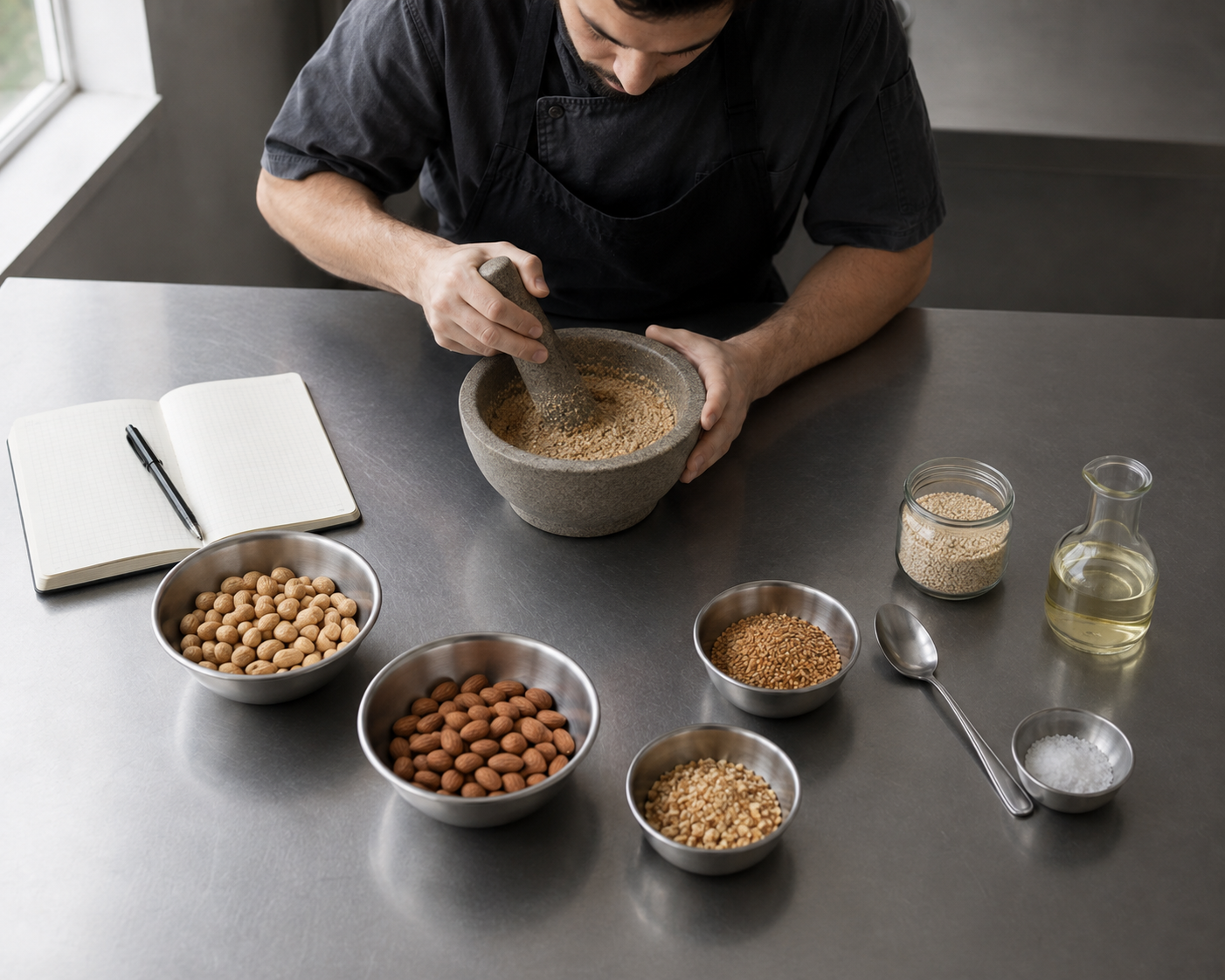
Three Nuts, Infinite Possibilities
Some ingredients open doors. Others open entire kitchens. Peanut, almond, and sesame are three such ingredients — a triad found across continents, each one humble, robust, and endlessly adaptable. Together, they form one of the most versatile flavor triangles in world cuisine. They can be sweet or savory, raw or roasted, whole or ground. They can thicken, perfume, glaze, crunch, or transform a dish with their natural oils and depth. Think of them as the architectural elements of flavor:
The peanut gives warmth and body,
The almond provides aroma and elegance,
The sesame gives perfume and earthiness.
And when used as a triad, they offer a palette of textures, scents, and techniques that travel across cultures. Peanuts, almonds, and sesame are small, but their possibilities are enormous. They connect continents and techniques — from sauces and milks to crunch and aroma. We can also explore this triad in the context of plant-based dairy applications. The Nut Triad is a reminder that experimentation begins with simple things, and that the smallest ingredients often have the loudest voices.
The Fusion Logic — How the Nut Triad Works
You can think of this triad in three layers of transformation:
1. State of the Nut
Raw: fresh, mild, ideal for milk, purées, and subtle sauces.
Germinated: brighter, more digestible, with a slight sweetness and vitality.
Roasted or toasted: deep, aromatic, full of caramelized notes.
2. Form of the Nut
Whole
Chopped
Powder/flour
Paste (like tahini or peanut butter)
Oil
Milk
Each transformation shifts the flavor profile. Almond milk tastes delicate and floral; roasted peanut paste tastes bold and grounding.
3. Function in a Dish
Base: nut pastes for curries, soups, dressings.
Texture: chopped nuts for crunch.
Aroma: sesame oil, toasted seeds.
Thickness: nut flours or blended nuts to thicken sauces.
Body: nut milk for soups, drinks, and desserts.
Contrast: raw nuts sprinkled over cooked dishes.
This is where the triad becomes a playground.
Nine Ways to Use the Nut Triad
1. Toasted Triad Finishing Crunch
Pan-roast equal parts peanut, almond, and sesame, roughly chop, and sprinkle over rice bowls, salads, grilled vegetables, or roasted fish for a five-second flavor upgrade.
2. Triad Nut Milk
Blend soaked almonds, peanuts, and sesame with water.
Strain for a creamy “fusion horchata” with deep aroma and natural sweetness — excellent for iced lattes or desserts.
3. Peanut-Almond-Sesame Sauce (万能酱 “universal sauce”)
A cross between Mexican peanut sauce, tahini, and almond cream.
Add lime, soy, garlic, and a touch of honey.
Use on noodles, roasted squash, grilled chicken, shrimp, or tofu.
4. The Triad Marinade
Blend toasted sesame, peanut butter, and ground almonds with ginger, turmeric, garlic, and citrus.
Works beautifully for chicken thighs, eggplant, mushrooms, or pork belly.
5. Nut Triad Romesco
Replace part of the traditional almond with peanut and sesame.
Use roasted chiles, tomatoes, olive oil, and vinegar — extraordinary with grilled octopus, cauliflower, or pasta.
6. Dessert: Nut Crumble Trio
Toasted nuts tossed with sugar, salt, cinnamon, and a touch of butter.
Sprinkle over yogurt, fruit, ice cream, hot cakes, or panna cotta.
7. Triad Nut Butter
Mix almond butter, peanut butter, and tahini.
Add honey, cacao nibs, and sea salt.
Spread on toast or use as a dip for apples or figs.
8. Fusion Soup Thickener
Add a spoonful of blended triad paste to coconut broth or tomato soup.
Creates body and umami without cream.
9. Sesame-Almond-Peanut “Gomasio”
Pulse toasted nuts with salt and spices to make a seasoned sprinkle.
Perfect for grains, eggs, roasted veggies, grilled fish, or avocado toast.
Cultural Note — A Global Pantry in Three Ingredients
This triad spans continents:
Peanuts traveled from South America to West Africa and Asia, becoming a staple in stews, sauces, and snacks.
Almonds flourished in the Mediterranean, North Africa, and Persia — from marzipan to tagines.
Sesame (one of the earliest domesticated seeds) shaped the culinary languages of Japan, Korea, the Levant, and East Africa.
Together, they reveal a surprising truth:Global food history is rooted in seeds and nuts — small things that traveled far, carrying flavor wherever people went.
Page-to-Plate Insights
Use them to spark action, refine your notes, and carry your creative process from the open page to a served table.
Pick one nut to be the base, one to be the aroma, and one to be the accent. Note how roasting changes aroma and how germination affects sweetness.
Make one triad in three forms — whole, paste, and milk — and describe the flavor shift.