Garlic — The Ingredient That Can Build or Overpower a Dish
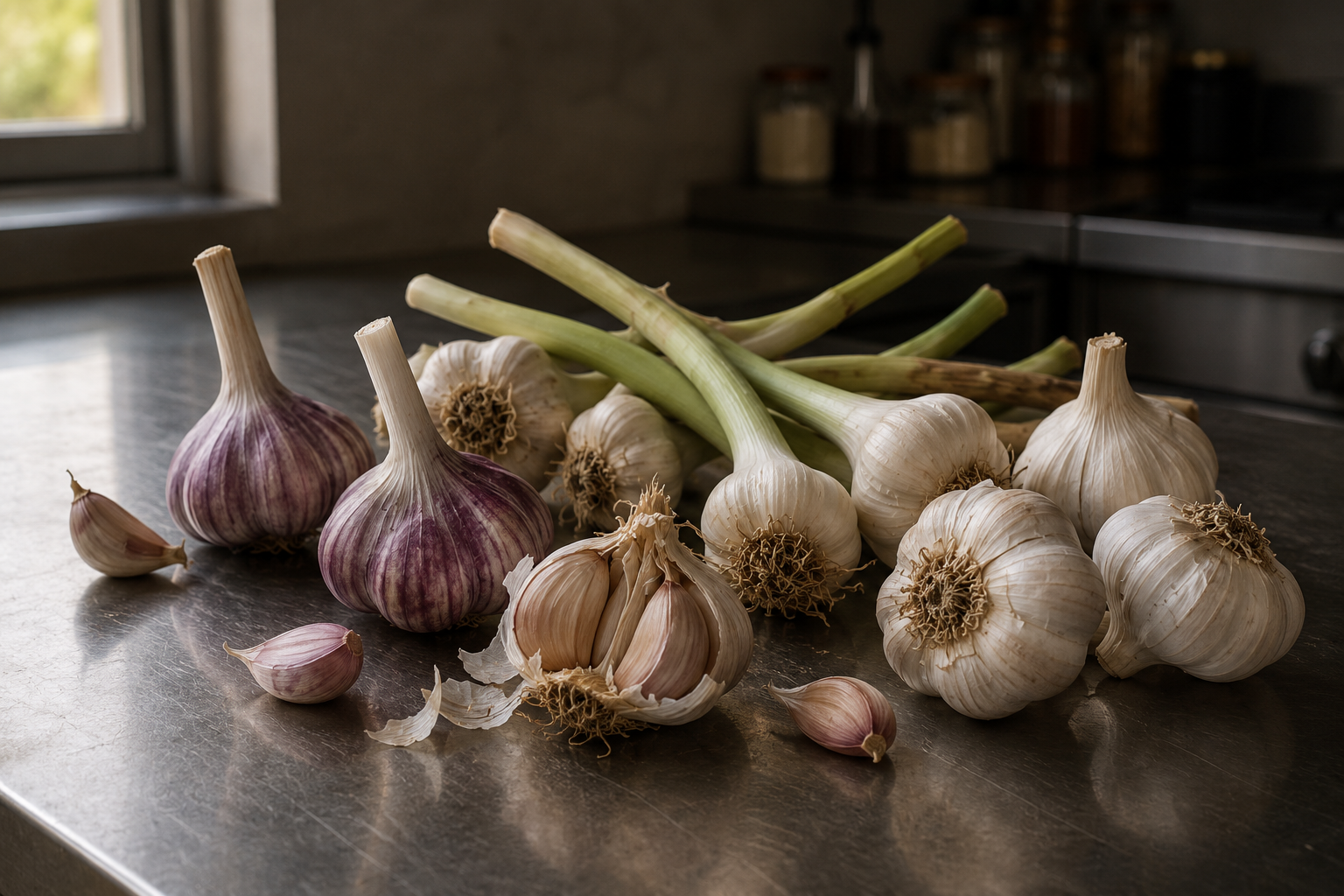
Garlic is one of the most familiar ingredients in the kitchen. It sits in the pantry, appears in countless recipes, and often enters a dish almost automatically: one clove, two cloves, minced, crushed, sliced, fried, roasted, or added at the end.
But garlic is not a casual ingredient. It is powerful, aromatic, and structurally important. Used with care, it can build depth, sweetness, warmth, pungency, and complexity. Used without intention, it can overpower everything around it.
Garlic teaches discipline. It asks the cook to think about timing, cut, quantity, freshness, heat, fat, oxidation, and cultural context. A clove of garlic added raw at the end of a dish is not the same as garlic slowly roasted until sweet, fried until golden, infused into oil, fermented into black garlic, or dried into powder.
Like onion, garlic belongs to the allium family. But its force is sharper, more concentrated, and more immediate. It can disappear into a sauce or announce itself completely. It can be medicine, seasoning, condiment, pantry staple, preservation tool, or culinary signature. To understand garlic is to understand how aroma becomes power in a recipe.
What Garlic Is — Bulb, Clove, Skin, Shoot, and Time
Garlic is a bulb composed of individual cloves, each wrapped in its own protective skin. The bulb itself is protected by outer layers that dry as garlic cures. This natural structure allows garlic to store, travel, and remain available across seasons.
Most of what we call “fresh garlic” in everyday cooking is actually cured garlic: garlic that has been harvested, dried, and stabilized so it can last. Truly fresh garlic, pulled from the ground and used before curing, has a different character. It is juicier, milder, greener, and often less aggressive. As garlic cures and ages, its flavor becomes more concentrated, sharper, and more familiar.
Garlic can be used in several forms:
fresh garlic, recently harvested and still moist
cured garlic, the common pantry bulb with dry skins
green garlic, young garlic harvested before full bulb development
garlic scapes, the tender flower stalks of hardneck garlic
dried garlic, flakes, granules, or powder
preserved garlic, pickled, fermented, confit, or oil-packed
black garlic, aged through controlled heat and humidity
garlic skins, used in some broths or infusions when clean and dry
Garlic is not a single flavor. It is a spectrum shaped by variety, age, handling, and technique.
Why Garlic Matters — Function Before Habit
Garlic matters because it performs many jobs in cooking.
It can act as:
aromatic foundation, beginning sauces, stews, soups, and marinades
pungency, especially when raw or freshly crushed
sweetness, when roasted, confit, or slowly cooked
depth, when browned carefully or layered into bases
heat and bite, when added raw at the end
condiment, in pastes, oils, sauces, and ferments
preservation partner, in pickles, brines, and marinades
seasoning, through powders, salts, and blends
flavor bridge, connecting fat, acid, herbs, chiles, and spices
Garlic is popular because it works. But that is also why it is often misused. It is easy to rely on garlic as a shortcut for flavor. The real work is learning when garlic should dominate, when it should support, and when it should remain almost invisible.
Garlic in Context — Why the Same Clove Is Never the Same
Every cuisine asks something different from garlic. In one preparation, garlic may be raw, sharp, and immediate. In another, it may be slowly softened into sweetness. In another, it may be fried until crisp, pounded into paste, roasted whole, fermented, or used only to perfume oil before being removed.
This context matters. A recipe that asks for “two cloves of garlic” is incomplete unless we understand the culinary logic around it. What size are the cloves? Are they mild or strong? Are they fresh, cured, or aged? Are they minced, crushed, sliced, grated, or left whole? Are they added at the beginning, middle, or end?
Garlic changes dramatically depending on:
the variety
the age of the bulb
the size of the clove
the cut
the cooking fat
the heat level
the moment of addition
the amount used
the acidity or salt in the dish
the surrounding culinary tradition
To cook with garlic well, we must stop treating it as automatic. Garlic needs context.
Garlic Forms and Their Uses
Fresh Garlic — Green, Juicy, and Immediate
Truly fresh garlic has not yet cured into the dry-skinned pantry bulb most people know. It is moist, aromatic, and often softer in pungency.
Best uses:
raw sauces
quick sautés
spring preparations
herb pastes
delicate broths
fresh marinades
Materia note:
Fresh garlic can be more subtle than cured garlic. It brings brightness and vegetal aroma rather than deep sharpness.
Cured Garlic — The Everyday Pantry Bulb
Cured garlic is the form most widely used in home kitchens. It stores well, travels well, and offers a concentrated garlic flavor.
Best uses:
sauces
sofritos
marinades
stews
roasted dishes
garlic oils
spice bases
daily cooking
Materia note:
Cured garlic is versatile, but its strength varies by variety, age, and storage. Taste and smell before assuming intensity.
Green Garlic and Scapes — Tender Garlic Before the Bulb
Green garlic and garlic scapes offer a softer, fresher expression. They carry garlic aroma, but with more herbaceous and vegetal notes.
Best uses:
sautés
soups
herb sauces
pestos
grain dishes
eggs
grilled vegetables
Materia note:
Use these when you want garlic character without the full force of mature cloves.
Dried Garlic — Powder, Granules, and Flakes
Dried garlic is not simply a substitute for fresh garlic. It behaves differently. Powder disperses quickly and works well in dry applications. Granules bring a slower release. Flakes add texture and can be rehydrated.
Best uses:
dry rubs
seasoning blends
marinades
snack coatings
bread doughs
spice mixes
sauces where fresh garlic would be too sharp
Materia note:
Dried garlic can taste stale if old. Store it well and replace it before it loses aroma.
Garlic Salt — Seasoning and Structure
Garlic salt combines salt with dried garlic. It can be useful, but it must be handled carefully because every addition brings both garlic and salinity.
Best uses:
fries
popcorn
grilled vegetables
seasoning blends
quick snacks
finishing salts
Materia note:
Garlic salt limits control. Use it when you want both salt and garlic together, not when either one needs to be adjusted separately.
Garlic Transformations — How Technique Changes Flavor
Raw Garlic — Sharpness and Heat
Raw garlic is intense, pungent, and immediate. Crushing or grating it releases a stronger aroma than slicing it, because more cells are broken.
Best uses:
dressings
aioli
salsas
chimichurri
toum
marinades
finishing sauces
Technique note:
Raw garlic can easily dominate. If you want less aggression, use less, soak briefly, combine with acid, or allow it to rest in oil or sauce before serving.
Sweated Garlic — Soft Aroma Without Browning
When garlic is gently cooked in fat, it softens and releases aroma without becoming bitter. This is one of the most important techniques for sauces and flavor bases.
Best uses:
sofritos
soups
stews
pasta sauces
vegetable bases
rice dishes
Technique note:
Garlic burns faster than onion. Often, onion should begin first, and garlic should be added later.
Golden Garlic — Warmth, Sweetness, and Depth
Lightly golden garlic develops sweetness and nuttiness. This is the stage many preparations need: aromatic, flavorful, but not bitter.
Best uses:
stir-fries
pasta
garlic oil
rice dishes
vegetables
legumes
Technique note:
Remove from heat just before it reaches the color you want. Carryover heat continues cooking it.
Fried Garlic — Crunch and Aroma
Fried garlic becomes both garnish and condiment. It brings texture, sweetness, and a roasted aroma.
Best uses:
noodles
soups
rice bowls
vegetables
stews
salads
dips
Technique note:
Thin slices brown quickly. Drain well and season immediately if needed.
Roasted Garlic — Sweetness and Softness
Roasted garlic transforms pungency into sweetness. The cloves become soft, spreadable, and mellow.
Best uses:
spreads
purées
dressings
soups
roasted vegetables
mashed potatoes
flatbreads
sauces
Technique note:
Roasted garlic is excellent when you want garlic warmth without sharpness.
Garlic Confit — Fat, Time, and Tenderness
Garlic confit is garlic slowly cooked in fat until tender. The cloves become soft and sweet, while the oil becomes infused with garlic aroma.
Best uses:
toast
sauces
dressings
grilled vegetables
beans
grains
compound butters or plant-based spreads
Safety note:
Garlic stored in oil can create food safety risks if mishandled. Keep garlic confit refrigerated, use clean containers, and consume within a safe short window.
Pickled Garlic — Acidity and Preservation
Pickled garlic changes sharpness into brightness. It can remain crisp or soften depending on the method.
Best uses:
mezze
salads
rice bowls
tacos
sandwiches
relishes
charcuterie-style spreads
Technique note:
Acid reshapes garlic’s intensity. Pickled garlic can be bold, but usually less harsh than raw garlic.
Fermented Garlic — Depth and Complexity
Fermented garlic develops acidity, funk, and layered savoriness. It can appear in brines, pastes, condiments, and sauces.
Best uses:
hot sauces
fermented chile pastes
dressings
broths
marinades
condiments
Technique note:
Fermentation changes both flavor and power. A small amount can transform a sauce.
Black Garlic — Sweetness, Time, and Alchemy
Black garlic is garlic transformed through controlled heat and humidity over time. It becomes dark, soft, sweet, acidic, and deeply savory.
Best uses:
dressings
sauces
broths
mushroom dishes
glazes
noodles
plant-based cooking
Materia note:
Black garlic is not stronger garlic. It is a different ingredient, closer to molasses, tamarind, dried fruit, and balsamic depth.
Burnt or Charred Garlic — Bitterness With Intention
Burnt garlic can easily become unpleasant, but controlled charring can bring bitterness, smoke, and depth in specific preparations.
Best uses:
broths
chile sauces
charred salsas
blackened condiments
grilled preparations
Technique note:
There is a difference between controlled bitterness and accidental burning. The first is technique; the second is loss of control.
Garlic as a Flavor Base Across Cuisines
Garlic appears across the world because it is adaptable and powerful.
It is central to:
Mediterranean sauces, marinades, aioli, and vegetable bases
Latin American recados, salsas, adobos, and sofritos
Middle Eastern toum, mezze, stews, and grilled preparations
East Asian stir-fries, broths, dumplings, and sauces
Southeast Asian curry pastes, relishes, and fried aromatics
Indian masala bases, chutneys, and pickles
African stews, spice pastes, and grilled foods
But garlic is never used the same way everywhere. Some cuisines celebrate it raw. Others soften it through fat. Some fry it until crisp. Others grind it into paste, ferment it, roast it, or use it as a quiet background. The ingredient is global. Its use is local.
Garlic, Health, and Culinary Perception
Garlic has long been associated with medicinal and health-supporting qualities in many cultures. People eat it not only because it tastes good, but because they believe it contributes to strength, immunity, circulation, digestion, or general well-being.
This cultural perception matters. It helps explain why garlic is loved, protected, and repeated across traditions. When garlic enters a dish, it often brings more than flavor; it brings the feeling that the food is doing something beneficial.
For our purposes, the culinary lesson is clear: garlic is an ingredient with both sensory and symbolic force. It tastes strong, smells strong, and carries a long history of being considered powerful.
Storage and Handling
Whole Cured Garlic
store in a cool, dry, ventilated place
avoid sealed plastic
keep away from moisture
use sprouting cloves quickly
discard cloves that are moldy, mushy, or sour-smelling
Fresh or Green Garlic
refrigerate loosely wrapped
use quickly for best aroma
treat like a fresh vegetable, not a dry pantry ingredient
Cut or Minced Garlic
use soon after cutting
refrigerate if not used immediately
avoid leaving minced garlic exposed for long periods
understand that oxidation changes aroma and flavor
Dried Garlic
store airtight, away from heat and light
replace when aroma fades
avoid clumping, dampness, or stale smells
Garlic in Oil
refrigerate and use within a safe short period
never leave homemade garlic-in-oil preparations at room temperature
label with date
Creative Expansion — Experimenting With Garlic
Garlic becomes especially powerful in fusion cooking because it already belongs to many traditions. The key is to understand which garlic behavior you are using.
Try:
black garlic and olive oil dressing for mushrooms or grilled eggplant
roasted garlic miso paste for soups, grains, or roasted vegetables
fried garlic and sesame crumble for noodles, rice, or beans
garlic confit with preserved lemon for flatbreads and mezze
charred garlic salsa with tomatoes, chiles, and herbs
fermented garlic chile sauce for tacos, bowls, or marinades
garlic scape pesto with pumpkin seeds and lime
garlic oil with rosemary and dried chile
pickled garlic with coriander seed and citrus peel
roasted garlic tahini sauce for vegetables, falafel, or grilled fish
Garlic can bridge cuisines, but it should not erase them. Use it to build direction, not to cover uncertainty.
Closing Reflection
Garlic is small, but it is not subtle unless we make it so. It can carry a sauce, define a condiment, perfume a broth, sharpen a dressing, sweeten a roast, or dominate an entire dish. Its power is why it matters, and also why it requires care.
To cook well with garlic is to understand restraint, timing, and context. It is to ask not only, “Should I add garlic?” but, “Which garlic, in what form, at what moment, and for what purpose?” Garlic is not just a pantry essential. It is one of the great instruments of flavor.