The Golden Ratios of Mixology — Foundations for Creative Cocktails
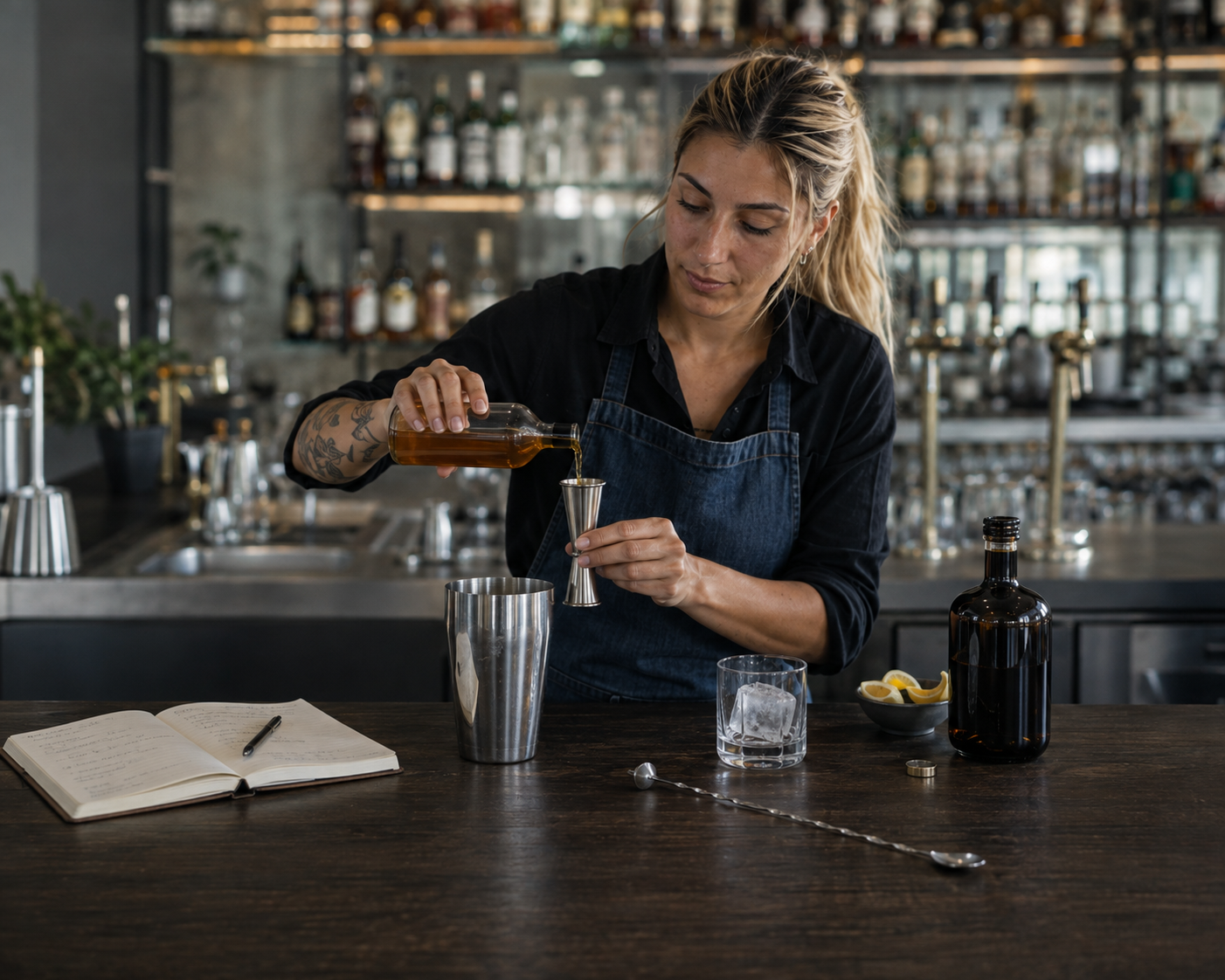
Creativity Begins With Structure
A cocktail can feel effortless when it is well made.
The first sip lands cleanly. The acid is present but not sharp. The sweetness supports without becoming heavy. The alcohol has strength but does not burn. The dilution opens the drink. The aroma arrives before the palate. The finish is clear enough to invite another sip.
This sense of ease is rarely accidental.
Behind many classic cocktails are ratios: simple relationships between spirit, acid, sweetness, bitterness, dilution, and aroma. These ratios are not rigid formulas meant to trap creativity. They are foundations. They give the drink structure so the cook or bartender can begin to experiment with confidence.
Before there were recipes, there were ratios. Every classic cocktail — from a daiquiri to a Manhattan — survives because its proportions are balanced, elegant, and structurally sound. In mixology, these proportions are the architecture. Once you understand the structure, you can add spices, citrus, herbs, infusions, and cultural influences without ever losing harmony. A good cocktail does not begin with creativity; it begins with clarity. Perfect the foundation, taste the equilibrium, and then… expand the universe.
For cooks, this is familiar. A vinaigrette has a ratio. A brine has a ratio. A custard, dough, marinade, syrup, or sauce has a logic of proportion. Once the foundation is understood, variation becomes possible.
Mixology works the same way. Before we invent, we learn how balance is built.
What Cocktail Ratios Are — Proportion as Grammar
A ratio is a relationship between parts.
In mixology, those parts may include spirit, citrus, sweetener, bitters, fortified wine, soda, juice, liqueur, dilution, or garnish. The exact measurement may change, but the relationship matters. A sour cocktail depends on one balance. A highball depends on another. An old-fashioned depends on another. A stirred drink depends on another.
Ratios help the cook understand what each ingredient is doing.
The spirit gives structure.
The acid gives brightness.
The sweetener gives body and balance.
The bitters give depth.
The dilution opens the drink.
The garnish directs aroma.
The bubbles lift.
The fortified wine softens or extends.
When the ratios are clear, a cocktail becomes easier to adjust. Too sour? Add sweetness or reduce acid. Too sweet? Increase acid or dryness. Too strong? Improve dilution. Too flat? Add bitterness, salt, or aromatic lift. Too thin? Reconsider sugar, texture, or glassware.
The ratio is not the drink. It is the skeleton.
Why Ratios Matter to Cooks
Cooks should care about cocktail ratios because they train the palate in precision.
In food, imbalance can sometimes hide inside texture, temperature, or complexity. In drinks, imbalance is exposed quickly. A cocktail is liquid and direct. There is little room for confusion. If it is too sweet, the palate knows. If it is too sour, the palate knows. If it is too alcoholic, too diluted, too bitter, or too flat, the structure reveals itself.
This sharpens a cook’s understanding of balance.
Cocktail ratios also help connect the beverage program to the food menu. If a dish is rich, the drink may need acidity, carbonation, bitterness, or dryness. If a dish is spicy, the drink may need sweetness, fruit, salt, or creaminess. If a dish is delicate, the drink should not overwhelm it. If a menu is smoky, herbal, citrus-driven, fermented, or coastal, the drink structure can echo or contrast those ideas.
Ratios make this work practical. They allow creativity to begin from control.
The Sour Ratio — Spirit, Citrus, Sweetness
The sour is one of the most important families in mixology.
At its most basic, a sour is built from spirit, citrus, and sweetener. It is the foundation behind many classic drinks: whiskey sour, daiquiri, margarita, pisco sour, gimlet variations, and countless house cocktails.
A common starting ratio is:
2 parts spirit
1 part citrus
1 part sweetener
This is not a universal law, but it is a useful place to begin.
The sour teaches one of the clearest lessons in balance: acid needs sweetness, sweetness needs acid, and spirit needs both to become drinkable. Too much citrus makes the drink aggressive. Too much syrup makes it heavy. Too much spirit makes it hot. Too little dilution makes the drink tight.
Culinary lesson
The sour is close to dressing logic. Fat is absent, but the structure of balance is similar: acid, sweetness, salt or bitters when needed, aroma, and body.
Creative directions
lime + rum + cane syrup
lemon + gin + herb syrup
grapefruit + tequila + agave
yuzu + vodka + ginger syrup
tamarind + mezcal + piloncillo syrup
The sour is a laboratory for acidity.
The Daiquiri — A Minimal Study in Balance
The daiquiri deserves special attention because it is one of the most precise cocktails.
It is usually built from rum, lime, and sugar. That simplicity is the challenge. There is nowhere to hide. The quality of the rum, the freshness of the lime, the sweetness of the syrup, the shaking, the dilution, and the temperature all matter.
A common starting ratio is:
2 parts rum
1 part lime
¾ to 1 part simple syrup
The daiquiri teaches restraint. A small adjustment changes everything. A sweeter rum may need less syrup. A harsh lime may need more sweetness. A delicate rum may be buried by too much acid. A more expressive rum may need a drier structure.
Culinary lesson
The daiquiri is like a three-ingredient sauce. It teaches how little is needed when proportion is correct.
Creative directions
white rum + lime + cane syrup
aged rum + lime + demerara syrup
rum + calamansi + palm sugar syrup
rum + lime + basil syrup
rum + lime + pineapple gomme
The daiquiri teaches that simplicity is not basic. It is exacting.
The Old-Fashioned Ratio — Spirit, Sweetness, Bitters
The old-fashioned is a lesson in concentration.
It does not rely on citrus. It is built around spirit, a small amount of sweetness, bitters, dilution, and aromatic garnish. This structure works especially well with spirits that already carry depth: whiskey, rum, brandy, mezcal, aged tequila, or other barrel-aged or characterful spirits.
A common starting ratio is:
2 parts spirit
¼ part sweetener
2 to 3 dashes bitters
Then dilution is added through stirring over ice.
The old-fashioned teaches that sweetness can season rather than dominate. It softens the spirit and gives it shape, while bitters add aromatic complexity. The garnish, often citrus peel, is not decoration. It gives the first aroma.
Culinary lesson
The old-fashioned is close to reduction logic. It is concentrated, restrained, and built around depth rather than refreshment.
Creative directions
bourbon + demerara syrup + aromatic bitters
rye + maple syrup + orange bitters
aged rum + piloncillo syrup + cacao bitters
mezcal + agave syrup + mole bitters
brandy + honey syrup + walnut bitters
The old-fashioned teaches how to work with power in small quantities.
The Highball Ratio — Spirit, Effervescence, Refreshment
The highball is one of the simplest and most useful drink structures.
It is usually built from spirit and a carbonated mixer: soda water, tonic, ginger beer, sparkling mineral water, cider, beer, or another effervescent liquid. It may include citrus, bitters, herbs, or syrup, but the basic idea is lightness and refreshment.
A common starting ratio is:
1 part spirit
3 to 4 parts carbonated mixer
The highball teaches dilution, temperature, carbonation, and restraint. The drink should feel lifted, not empty. Ice quality matters. Glass temperature matters. Carbonation matters. The garnish matters because the structure itself is simple.
Culinary lesson
The highball is a palate tool. It can refresh between bites, lift fried food, soften spice, and support casual or long meals without exhausting the palate.
Creative directions
whisky + soda
gin + tonic
tequila + grapefruit soda
rum + ginger beer
shochu + sparkling water + citrus
mezcal + mineral water + lime
The highball teaches that not every drink needs density. Sometimes the strongest choice is clarity.
The Stirred Drink Ratio — Spirit, Fortified Wine, Bitters
Stirred drinks are built around smoothness, temperature, dilution, and aromatic integration. They are not shaken because they usually do not contain citrus, cream, egg, or opaque juices. Stirring chills and dilutes while preserving a silky texture.
Classic examples include the martini, Manhattan, negroni-style drinks, and many vermouth-based structures.
A common Manhattan-style starting ratio is:
2 parts spirit
1 part fortified wine
1 to 2 dashes bitters
A common martini-style structure may move drier or wetter depending on the desired profile:
2 to 3 parts spirit
1 part dry vermouth
The stirred drink teaches restraint and the role of fortified ingredients. Vermouth, sherry, port, quinquina, amaro, and other aromatized wines can soften the spirit, add bitterness, bring herbal complexity, or create a bridge to food.
Culinary lesson
Stirred drinks are about integration. They are less about brightness and more about depth, polish, dryness, and aromatic control.
Creative directions
rye + sweet vermouth + bitters
gin + dry vermouth + lemon peel
mezcal + sweet vermouth + orange bitters
rum + sherry + cacao bitters
vodka + dry vermouth + herb oil garnish
The stirred drink teaches texture through dilution.
The Spritz Ratio — Bitterness, Bubbles, and Appetite
The spritz is a bridge between aperitif culture and mixology.
It is usually lighter in alcohol, bitter or bittersweet, sparkling, and designed to open appetite. A spritz may include aperitif, sparkling wine, soda, citrus, herbs, or fruit.
A common starting ratio is:
3 parts sparkling wine
2 parts bitter aperitif
1 part soda
This can vary widely, but the logic is consistent: bubbles, bitterness, freshness, and moderate strength.
Culinary lesson
The spritz is useful before a meal because bitterness and carbonation stimulate appetite without overwhelming the palate.
Creative directions
bitter orange aperitif + sparkling wine + soda
dry vermouth + tonic + citrus
amaro + sparkling wine + mineral water
hibiscus syrup + bitter aperitif + soda
sherry + grapefruit soda + herbs
The spritz teaches how drinks can begin a meal with lightness.
The Collins and Fizz Logic — Sour Plus Bubbles
A Collins or fizz structure extends the sour with carbonation.
The base is spirit, citrus, and sweetener, then soda or another sparkling element lengthens the drink. This makes it brighter, taller, and more refreshing than a short sour.
A common starting ratio is:
2 parts spirit
1 part citrus
¾ to 1 part sweetener
2 to 3 parts soda
The difference between a Collins and a fizz can depend on tradition, glassware, shaking, egg white, carbonation, and service style, but the basic culinary lesson is clear: bubbles lengthen acid and sweetness.
Culinary lesson
This structure is excellent for pairing because it offers acidity, dilution, refreshment, and aroma without becoming too dense.
Creative directions
gin + lemon + simple syrup + soda
mezcal + lime + agave + mineral water
rum + grapefruit + honey syrup + soda
vodka + yuzu + ginger syrup + soda
pisco + lemon + herb syrup + soda
The Collins teaches extension.
The Margarita and the Role of Liqueur
The margarita belongs to the sour family, but it introduces another important lesson: the role of liqueur.
Instead of using only sugar syrup for sweetness, the margarita often uses orange liqueur, which brings sweetness, alcohol, citrus aroma, and sometimes bitterness.
A common starting ratio is:
2 parts tequila
1 part lime
1 part orange liqueur
Some versions reduce the liqueur and add agave syrup. Others are drier or more acidic.
Culinary lesson
A liqueur is not just sweetness. It is flavored sweetness with alcohol and aroma. This matters when building drinks, sauces, desserts, and glazes.
Creative directions
tequila + lime + orange liqueur
mezcal + lime + agave + orange bitters
tequila + grapefruit + chile syrup + orange liqueur
sotol + lime + herbal liqueur
mezcal + tamarind + piloncillo + orange peel
The margarita teaches how sweetness can carry identity.
The Role of Bitters, Salt, and Micro-Adjustments
Some ingredients work in drops, pinches, and sprays.
Bitters, saline solution, salt, tinctures, absinthe rinses, aromatic oils, citrus oils, smoke, and herb essences may appear in tiny amounts, but they change the structure dramatically.
For cooks, this is familiar. A pinch of salt changes sweetness. A few drops of vinegar can brighten a soup. A small amount of miso can deepen a sauce. A touch of chile can wake up a dish.
In cocktails, these micro-adjustments are often more visible because the drink is compact.
Key idea
Small quantities can create large consequences.
This is one of the strongest lessons mixology offers to culinary practice.
How to Use Ratios Creatively
Ratios are starting points, not cages.
To create from a classic structure, keep the ratio stable first and change one variable at a time.
Change the spirit
Rum becomes mezcal. Gin becomes aquavit. Whiskey becomes aged rum.
Change the acid
Lime becomes yuzu, lemon, grapefruit, tamarind, vinegar shrub, verjus, or acid-adjusted juice.
Change the sweetener
Simple syrup becomes honey, piloncillo, palm sugar, maple, fruit syrup, herb syrup, or spiced syrup.
Change the bitter element
Aromatic bitters become cacao bitters, orange bitters, mole bitters, coffee bitters, or herbal tincture.
Change the aroma
Citrus peel becomes mint, basil, rosemary, smoke, sesame oil, flowers, or toasted spice.
Change the dilution
Shake, stir, build, lengthen with soda, or serve over crushed ice.
But document each change. Otherwise, experimentation becomes guesswork.
The Creative Chef Method applies here as clearly as it does in cooking: research, experiment, document, refine.
Pairing Ratios With Food
Each cocktail structure has a different relationship to food.
Sours
Good with fried foods, seafood, grilled vegetables, spicy preparations, and rich dishes that need acid.
Daiquiris
Good with tropical fruit, seafood, citrus-driven dishes, grilled fish, light snacks, and chile-lime preparations.
Old-Fashioneds
Good with roasted, smoked, caramelized, nutty, bitter, or dessert-adjacent dishes.
Highballs
Good with fried foods, salty snacks, casual plates, grilled foods, spicy dishes, and long meals.
Stirred Drinks
Good before dinner, with bitter greens, charcuterie-style plates, aged flavors, mushrooms, nuts, and richer preparations.
Spritzes
Good as aperitifs, with olives, pickles, fried snacks, seafood, citrus, herbs, and lighter first courses.
Collins and Fizzes
Good with brunch dishes, herbs, seafood, salads, fresh vegetables, and spicy foods.
A ratio is not only a technical structure. It is a pairing tool.
Practical Notes — Measuring, Tasting, and Dilution
Precision matters.
In cooking, a cook can often adjust by feel. In mixology, especially when learning, measurement is essential. Use a jigger, scale, or measured spoons. Record your ratios. Taste before and after dilution when possible.
Best practices
Measure before improvising.
Use fresh citrus.
Taste syrups for sweetness and aroma.
Control ice quality.
Chill glassware when useful.
Shake drinks with citrus, juice, cream, or egg white.
Stir spirit-forward drinks.
Do not ignore dilution.
Smell the drink before serving.
Garnish with purpose.
A cocktail is finished when the structure, temperature, aroma, and dilution are aligned.
Creative Exercise — Build One Structure Three Ways
Choose one ratio and make three versions.
For example, use the sour structure:
2 parts spirit
1 part citrus
1 part sweetener
Version 1: Classic
Rum, lime, simple syrup.
Version 2: Herbal
Gin, lemon, basil syrup.
Version 3: Culinary
Mezcal, grapefruit-lime, smoked honey syrup, pinch of salt.
Document the results.
Which version feels balanced?
Which one is too sweet?
Which one needs more acid?
Which spirit carries the structure best?
Which garnish changes the aroma?
What food would each version pair with?
This is how ratios become authorship.
Closing — The Foundation Before the Invention
Creative cocktails do not begin with random ingredients.
They begin with structure.
The golden ratios of mixology give the cook a way to understand balance before variation. They show how acidity, sweetness, bitterness, dilution, aroma, and alcohol work together. They also reveal why small changes matter.
Once the foundation is understood, creativity becomes clearer. A daiquiri can move toward tamarind and piloncillo. A highball can carry herbs and smoke. An old-fashioned can hold cacao, chile, or coffee. A spritz can become floral, bitter, coastal, or fruit-driven.
But the ratio remains the compass.
In mixology, as in cooking, freedom begins when the grammar is understood.
Cultural Note — Foundational Cocktails as Global Stories
Many iconic cocktails were born from cultural encounters:
The daiquiri was shaped by Cuban rum and American naval presence.
The margarita reflects the meeting of Mexican agave and global citrus culture.
The old-fashioned traveled from early American taverns to Japanese bars, where it became a ceremony.
Fusion cocktails are not new — they’ve always emerged from crossroads, ports, and contact zones. Cocktails are history served in a glass.
Page-to-Plate Insights
Use them to spark action, refine your notes, and carry your creative process from the open page to a served table.
Choose one foundational ratio (Sour, Old-Fashioned, Manhattan/Martini, Highball, or Fizz). Make it in its classic form first — no variations, no aromatics.
Write down what “balance” feels like: acidity, sweetness, aroma, dilution. Then create two variations, changing only one variable each time (spirit, citrus, sweetener, or aromatic).