The Implementation Gap — Why Restaurant Vision Often Fails to Become Daily Practice
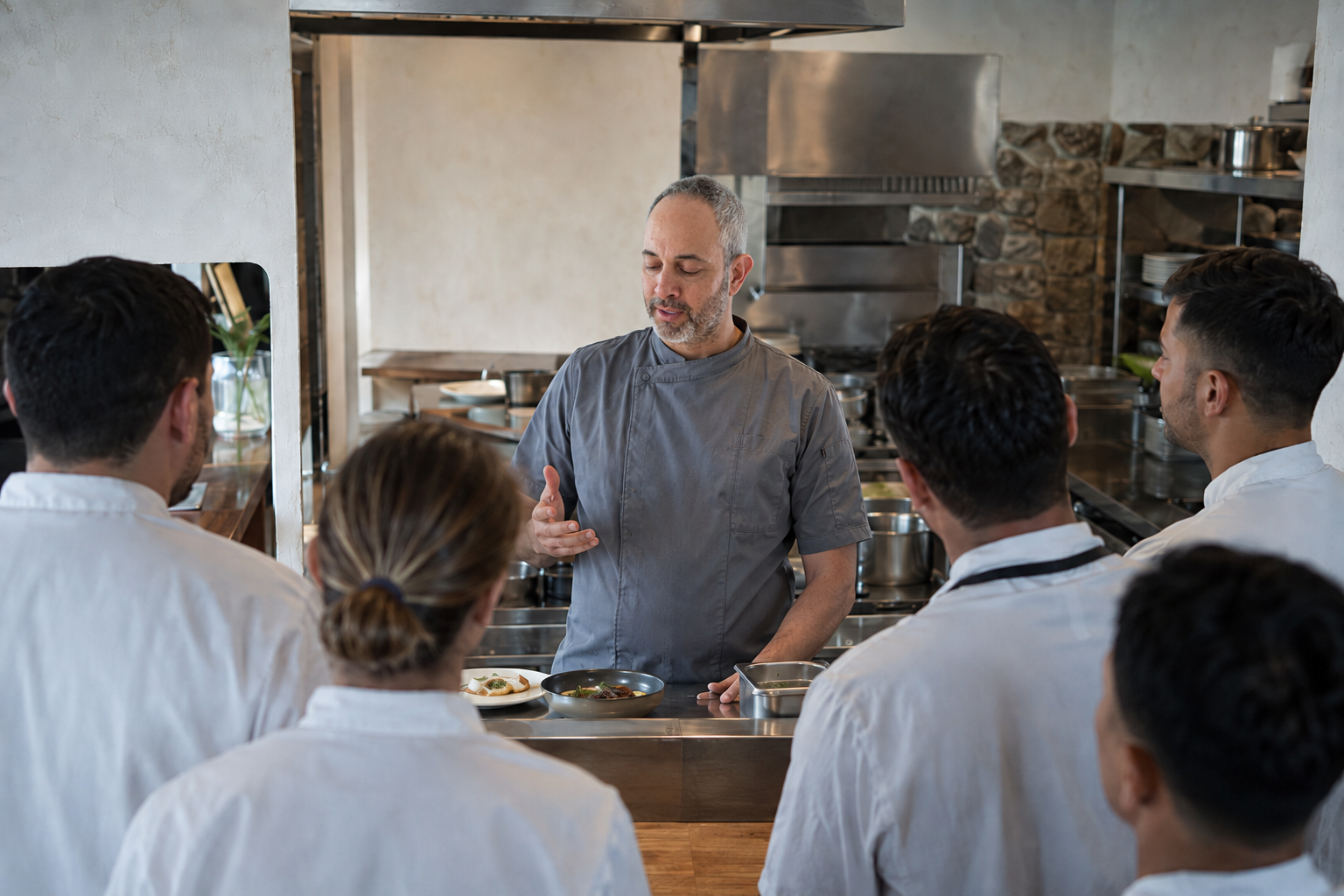
A restaurant can know what it wants to be and still fail to become that in daily practice. The owner may have a clear vision, the brand may have been carefully developed, the menu may make sense on paper, the service standards may be written, and the procedures may exist somewhere in a manual. Managers may genuinely believe they have explained what needs to happen. And yet, once service begins, the vision somehow does not arrive.
One location does something one way and another interprets it differently. One manager explains the standard clearly while another changes the message. The kitchen and dining room begin behaving like separate businesses. New employees take too long to understand how the restaurant works. Procedures technically exist, but no one follows them consistently. The same problems return every week, and eventually everyone becomes tired of correcting them. This is the implementation gap: the distance between what the restaurant intends and what people are actually able to practice every day.
That gap can become extremely frustrating because it is easy to misread. Owners may conclude that people are not listening. Managers may think the staff is resistant. Employees may feel they are being blamed for standards that were never properly explained or that do not fit the reality of the work. The kitchen may think the floor does not understand food, while the floor thinks the kitchen does not understand guests. Slowly, everyone begins protecting their own side.
The tone of the restaurant changes when this happens. Corrections become personal. Frustration becomes passive-aggressive. People start speaking about one another instead of with each other. Toxic behaviors are evident within the staff. Small misunderstandings become evidence that someone does not care enough. The restaurant may still have talented people and a strong concept, but the intention has not been translated into a system people can actually embody and perform.
A Vision Still Has to Become Behavior
A restaurant vision can be powerful. It can describe the food, the hospitality, the tone of the room, the price level, the relationship to ingredients, the rhythm of service, and the kind of experience guests should have. But a vision does not execute itself. Someone still has to translate it into behavior.
If a restaurant says it is warm and attentive, what does that mean when a guest walks through the door? How quickly should they be acknowledged? Who is responsible for the first contact? What does attentiveness look like when the server has several tables and the room is full? If the restaurant says it is ingredient-driven, what does that mean for the service team? Can they explain why a dish changes seasonally? Do they understand enough about the ingredients to speak with confidence? If the restaurant describes itself as casual but precise, what does that mean for language, uniforms, table setting, music volume, plating, and timing?
These may sound like small questions, but they are where the vision becomes real. Without this translation, the idea remains in the owner’s mind, the branding document, the website copy, or the speech given to the team when the restaurant opens. It does not automatically enter the hands, voice, timing, and judgment of the people who carry the business every day. Implementation is the work of making that translation repeatable.
One of the biggest obstacles is the assumption that certain things are obvious. Restaurants are full of phrases like “It is common sense,” “They should know,” “We already explained it,” or “This is simply how restaurants work.” But common sense belongs to context. It is shaped by experience, culture, language, training, hierarchy, and habit. What feels completely obvious to someone who has worked in formal dining for fifteen years may be unfamiliar to someone coming from a café, banquet hall, fast-casual restaurant, family business, or another country with a different service culture.
When a restaurant relies too heavily on common sense, it forces people to guess. And when they guess incorrectly, they may be corrected as if they had deliberately ignored the standard. That is where resentment begins. If something matters, it should be explained. If it needs to happen consistently, it should be trained. If it affects guests, money, safety, timing, or the identity of the restaurant, it should not depend entirely on personal intuition. What the restaurant needs is not common sense so much as shared sense, and shared sense has to be built.
A Manual Is Only the Beginning
Many restaurants believe a standard has been implemented because it has been written down. There is a manual, an opening list, a closing checklist, a training document, a brand book, or a folder full of procedures. All of these things can be useful, but they are references. They are not going to be implemented by themselves.
Implementation begins when the document is translated into action, taught to the people who need to use it, tested inside the real workflow, adjusted where necessary, and followed up until it becomes part of the rhythm of the restaurant. A procedure can look perfectly clear on paper and still conflict with the physical reality of service. An owner, consultant, designer, or corporate office may create a standard without fully understanding the station where it needs to happen. The instruction may be correct in theory and impossible in practice.
I have seen this happen in very small ways. A restaurant tells servers that used napkins must be placed in a particular basket, but the staff continues leaving them somewhere else. Management assumes the waiters are not listening. Then someone finally looks at the station and discovers that the basket was never installed. Service begins, the napkins still need to go somewhere, and the staff simply returns to the old habit. The problem was not attitude. The implementation was incomplete.
The same thing can happen in the kitchen. New pans are purchased, but weeks later management notices that the cooks are still using the old ones. The immediate assumption may be resistance or laziness, until the cooks explain that no one told them the new pans were ready to use or whether the old ones should be removed. They did not want to take equipment that had not been assigned. Again, the change existed at the level of intention, but no one completed the final step of putting it into practice. These examples are small, but they reveal something larger. A procedure is not implemented because somebody announced it. It is implemented when the conditions exist for people to do it.
Diagnosis Has to Come Before Correction
When management sees that a standard is not being followed, the first instinct is often to correct the behavior. Tell them again. Send another message. Reprimand the employee. Push the manager. Write another memo. Sometimes correction is necessary, but before correcting, someone should understand why the standard is not being practiced.
Do people understand it? Were they trained? Do they know why it matters? Does the workflow support it? Is the equipment available? Is the physical space set up correctly? Are managers explaining the same thing? Does the instruction contradict another priority? Is the team resisting the change because it is impractical, unclear, or badly timed?
Without diagnosis, correction attacks the visible symptom while the cause remains untouched. The napkins are in the wrong place, so the visible problem appears to be employee behavior, but the root problem may be that the basket was never installed. A new menu item is not selling, so management assumes servers are not promoting it, when perhaps they do not understand the dish, do not believe in it, or make better tips selling something else. The kitchen is not following a plating standard, but perhaps the plate takes too long during peak service, the garnish is not consistently available, or the evening crew was never properly trained.
Diagnosis requires observation before accusation. Someone has to watch the work as it actually happens. They need to speak with the people doing it, look at the station, understand the timing, see the tools, and notice the moment when the intended system breaks down. A restaurant cannot correct intelligently what it has not understood.
This is also why the people doing the work need to be heard. Implementation cannot be designed only from above. Leadership still matters. Someone has to decide what the restaurant is trying to become and which standards need to be protected. But the people carrying those standards every day are often the first to see where the friction appears. A server may know that a table-side explanation is too long for lunch service. A cook may know that a garnish cannot be produced consistently with the current staffing. A dishwasher may understand that new glassware is breaking because the racks do not fit. A host may see that the seating policy sounds logical but creates pressure in the same section every night. Listening to those observations does not mean the staff decides everything. It means leadership understands that implementation is a translation process, and translation has to move in both directions.
People Need to Understand the Why
A person can follow an instruction without understanding it, at least for a while. The weakness appears under pressure. When service gets busy, people tend to return to what they understand. If the reason behind a procedure is unclear, the procedure is usually the first thing to disappear.
This is why the “why” matters so much. A server may be asked to describe a dish in a particular way. If they believe they are only memorizing a script, they may repeat it mechanically or skip it when busy. If they understand that the dish contains an unfamiliar ingredient and the explanation helps the guest order confidently, then the same action becomes part of hospitality. A cook may be told to place a garnish in one specific position. If the cook thinks it is merely decorative, the placement may be changed when service speeds up. If they understand that the garnish is positioned there to keep a crisp element away from the sauce, the standard becomes functional.
The same happens with seating. A host may look at several empty tables and feel that it makes no sense not to seat them immediately. But if they understand that controlled seating protects the kitchen, bar, and service team from receiving too many orders at once, then pacing no longer looks like an unnecessary restriction. It becomes operational intelligence. Purpose creates judgment. When people understand why something matters, they can protect the intention even when circumstances change. When they know only the instruction, they can either obey it or subordinate it.
Training Has to Survive the First Explanation
Many implementation problems are really training problems. A manager explains something once and assumes the information has been transferred. A new employee shadows someone for one shift and is expected to understand the restaurant. A policy is announced during pre-service and then never discussed again. A manual is handed over without anyone checking whether the person understood it.
Restaurants do not work that way. They are busy, physical, social environments where pressure changes behavior. Old habits return. New employees arrive. Lunch and dinner behave differently. Tuesday and Saturday are not the same restaurant. A standard that seemed easy during training may become difficult under volume. This is why implementation needs follow-up. In the first few services after a change, someone should observe whether people understood it and whether it actually works. A week or two later, the restaurant should check whether the procedure is still being followed or whether it has already begun to drift. A month later, it may be worth asking whether the standard has become part of the operation or still depends on someone reminding people constantly.
Training is therefore not simply information delivery. It is the process of helping people practice something until it becomes reliable. Managers have to be aligned before they can carry that process. One manager cannot enforce the standard while another ignores it. One cannot explain the reasoning while another says, “Just do it.” One cannot allow exceptions while another punishes them. Once that happens, staff stop following the restaurant and start adjusting to whichever manager happens to be on duty. That creates cynicism very quickly because people learn that the rules are not really rules. They are personal preferences.
If implementation is going to hold, managers need to understand the purpose of the change, the expected behavior, where flexibility is allowed, and how correction should happen. This becomes particularly important when someone is promoted internally. A strong employee may know the operation extremely well, but that does not automatically mean they know how to train others, communicate changes, follow up, correct behavior, or hold people accountable. Promotion without preparation can create another implementation gap: the role changes, but the person has not yet been equipped to carry it.
The Restaurant Has to Speak With One Voice
Implementation becomes especially fragile when the kitchen and dining room operate as separate worlds. The kitchen protects production. The service team protects the guest. Both may sincerely believe they are protecting the restaurant, but they may be protecting different versions of it. The kitchen introduces a dish without giving the service team enough understanding to explain it. Servers promise modifications the kitchen cannot support. The floor complains about timing without understanding prep constraints. The kitchen dismisses guest feedback because it arrives through people they do not trust. These tensions may appear to be departmental, but the guest experiences only one restaurant.
The guest does not care that the kitchen and floor have different interpretations of the menu. They only know that the server could not explain the dish, the modification was mishandled, the plate took too long, or the experience felt disconnected. A restaurant vision therefore has to cross the pass. The kitchen needs to understand the guest-facing promise, while the service team needs enough understanding of the culinary logic to represent the food honestly.
This may require menu tastings, stronger pre-shift explanations, shared feedback, clearer language, or more disciplined communication between the chef and floor manager. The pass should not become a border between two countries. It should be the point where the restaurant becomes one experience.
Someone Has to Own the Implementation
Every meaningful change needs a person responsible for making sure it actually enters practice. This does not mean only one person does the work, but somebody has to own the process. Who confirms that the new service sequence is being followed? Who checks that the basket was installed? Who makes sure the new pans are in use and the old ones have been removed? Who observes whether the new dish is being described correctly? Who gathers feedback after the first week? Who decides whether the procedure needs adjustment?
Without ownership, restaurants often depend on hope. The standard was explained, so everyone hopes it will happen. The training happened, so everyone assumes it was understood. The new equipment arrived, so someone assumes people will begin using it. Implementation needs more than that. Someone has to watch, follow up, correct, document, and refine. Someone needs to hold accountability.
That becomes even more important because restaurants contain several priorities at the same time: speed, hospitality, accuracy, cleanliness, sales, cost control, guest comfort, safety, consistency, and staff wellbeing. In theory, they all matter. In practice, they often collide. A server is told to spend more time explaining dishes but also to move faster. The kitchen is told to plate more precisely while reducing ticket times. A manager is told to control labor while providing more training.
If priorities are not clear, everyone creates their own hierarchy. The kitchen chooses speed, the server chooses hospitality, the owner chooses cost, and the manager chooses whatever avoids immediate conflict. Then everyone appears misaligned even though each person believes they are protecting the restaurant.
Implementation therefore includes saying what matters most when priorities collide. During peak service, what cannot be compromised? When short-staffed, which standard still has to hold? When a guest is waiting, what decision is the server allowed to make without finding a manager? When a new procedure slows service, do we change the procedure, staffing, or expectation? Clear priorities give people enough direction to make good decisions when leadership is not standing beside them.
Culture Is Implemented Too
Restaurants often speak about ‘restaurant culture’ as though it simply appears from the personalities in the room. But culture is also implemented through repeated behavior: how people are corrected, how managers listen, how new employees are trained, how conflict is handled, how standards are explained, how mistakes are treated, and how the kitchen speaks to the floor.
A restaurant may describe itself as collaborative, but if every decision comes from above without explanation, the culture is not collaborative. It may call itself precise, but if managers repeatedly ignore inconsistency, precision is only a word. It may claim hospitality as a central value, but if staff are treated with contempt behind the scenes, that tension will eventually reach the guest. People believe repeated behavior more than they believe statements. This is why the implementation gap is not only technical. It is relational. If the restaurant vision says one thing and leadership behaves another way under pressure, the team will learn from the behavior.
That is also why implementation should not be understood simply as forcing compliance. Correction is part of management, but the deeper process is refinement. A restaurant introduces a standard, the team practices it, problems appear, leadership observes, adjustments are made, the team tries again, and the standard becomes clearer. That is not evidence that the original idea failed. It is how implementation becomes real.
A procedure that cannot survive contact with the actual restaurant may need revision. A training method that does not create understanding may need improvement. A standard that depends on equipment, staffing, or space the restaurant does not have may need to be reconsidered. The goal is not to defend the original instruction at all costs. The goal is to make the restaurant’s intention executable. Sometimes the staff is resisting. Sometimes the original idea was incomplete. Good leadership has to be able to tell the difference.
The Person Coming In Has to See Before Correcting
When someone enters a restaurant specifically to help with implementation, the approach matters. Arriving simply to declare what is wrong may temporarily satisfy an owner who is already frustrated, but it can create more resistance than understanding. A better approach begins with observation. What is already working? Where are people improvising intelligently? Where is the system actually broken? Which instructions are unclear? Where does the workflow contradict the expectation? Where is the team capable but unsupported?
The goal is not to humiliate a restaurant’s staff into improvement. It is to see accurately. That means looking at surface problems while also asking what produces them. It means listening to owners, managers, chefs, servers, cooks, dishwashers, and, when appropriate, guests. It means studying the sequence of work rather than only the final mistake. Only then does correction become useful. What needs to change first? What can wait? Who needs training? Which tools are missing? Which managers are interpreting the standard differently? Which procedures need to be simplified? Which changes require follow-up? Implementation requires order because trying to fix everything at once simply creates another form of chaos.
The Daily Practice Is the Test
The true test of a restaurant vision is not whether it sounds convincing in a meeting or whether it has been written beautifully in a manual. The test is whether it appears when the guest arrives, when the kitchen is busy, when the server is under pressure, when the manager is not standing nearby, when a new employee joins, when something goes wrong, and when two priorities collide. This is where implementation either holds or disappears.
A restaurant becomes what it repeats, not only what it announces. If the vision is not reaching the people who have to deliver it, the answer is rarely to repeat it louder. The answer is to translate it more carefully into roles, routines, training, communication, priorities, ownership, follow-up, correction, and refinement. People are not machines. They do not receive instructions and execute them automatically. They need context, practice, tools, time, and leadership. They need to understand what to do, why it matters, and how their work supports the identity, standards, and commercial purpose of the restaurant.
That is the real work of implementation. It often appears in very small details: the missing basket, the unused pans, the dish no one sells because no one understands it, the manager who explains the standard differently, the priority that was never clearly named. Those details may seem minor, but they are where the restaurant becomes real. A vision only matters if it can be practiced. And practice only becomes consistent when the restaurant takes responsibility for helping people understand how to carry it.
The Implementation Gap — Why Restaurant Vision Often Fails to Become Daily Practice