
CULINARY CREATIVITY IS BOUNDLESS
Culinary culture is borderless — fusing ingredients into a reciep is not a trend; it is our oldest tradition. From coast to coast, from ports to inland valleys, through mountains, rivers, and old roads where ancestral techniques still shape flavor, every culinary world has been formed through movement, exchange, and curiosity. I understand fusion not as novelty but as a way of recognizing how ingredients, techniques, and stories have always traveled, come across each other and fused into a recipe that becomes a favorite.
When flavors from different regions encounter one another, they open new paths of imagination, new possibilities for cooking, and new ways of understanding where taste comes from. Through these flavorful explorations I propose a freestyle approach to recipe experimentation, an invitation to explore the unexpected, and revisit heritage and tradition. I believe the kitchen is not just a place for preparing food; it is the ultimate stage for creative expression and profound transformation.”

Parrilla Meets Tacos — Fire, Smoke & the Language of the Grill
Few foods are as democratic as the taco. Few techniques are as primal as grilling over fire. When the parrilla, Latin America’s open-flame grill, meets the taco’s portable poetry, we get a celebration of smoke, texture, and sharing. This is the meeting of fire and palm, ember and tortilla, a place where Argentine asado, Mexican street food, and Pacific Coast seafood converge.

Building a Plant-Based Fusion Sofrito — Mediterranean Aromatics Meet Asian Ferments
Slow heat unlocks sweetness. Moisture evaporates. Aromas deepen. The result is a paste-like base that carries the memory and intention of many meals. In this article, we explore how the Mediterranean sofrito tradition meets Asian ferments like miso and doenjang, bringing umami, complexity, and depth to a preparation already rich in history. The result is a plant-based flavor powerhouse you can use in dozens of fusion dishes.
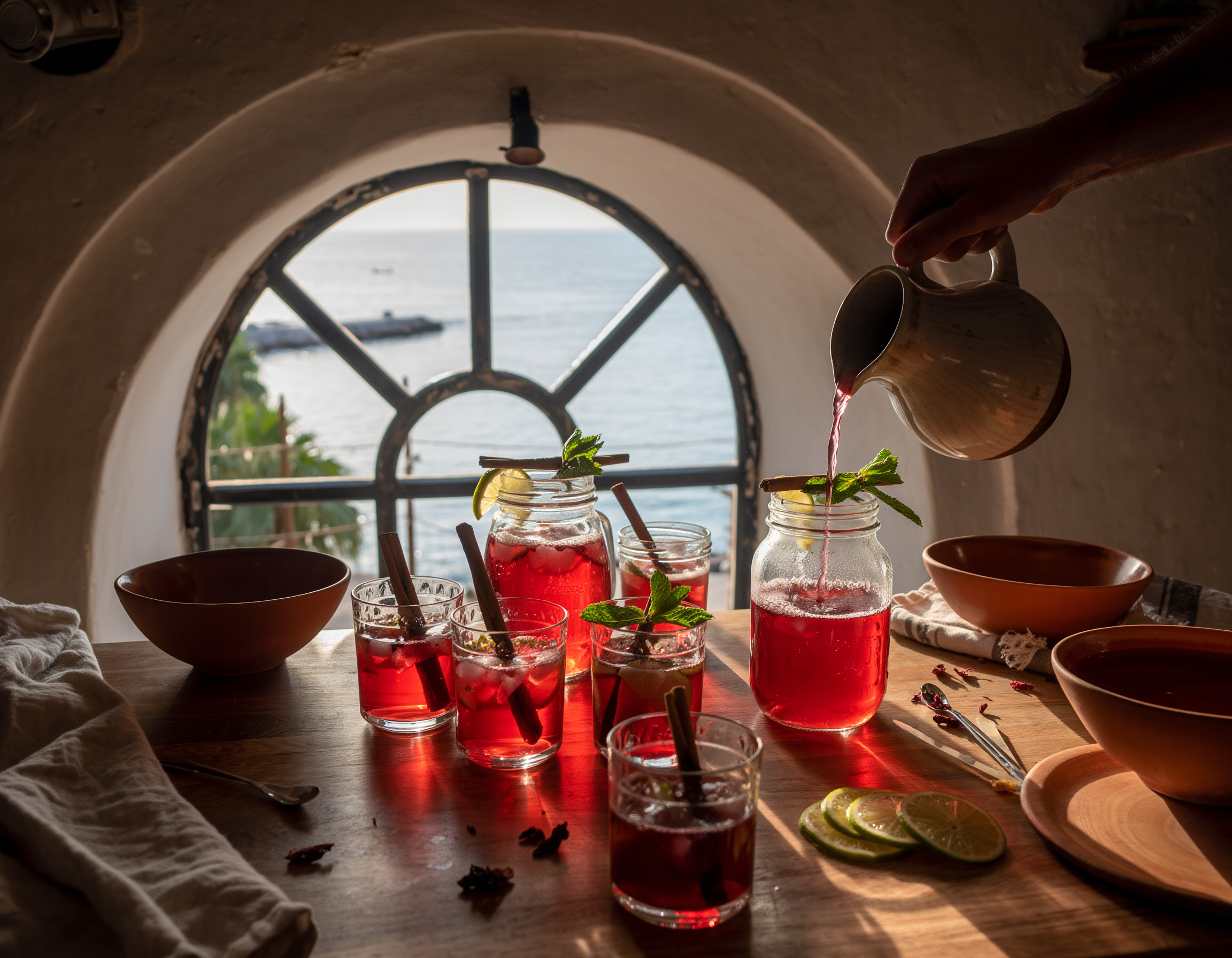
Rosa de Jamaica — The Scarlet Infusion of Flavor and Memory
Few ingredients embody both beauty and depth like hibiscus flower: tart, red, and aromatic. Known across Latin America as rosa de Jamaica, it is more than a drink ingredient; it’s a color, a mood, and a ritual. From the mercados of Oaxaca to Guatemalan kitchens, from West African “bissap” to Caribbean “sorrel,” the hibiscus flower has traveled across oceans and time, dried petals carried in spice sacks, steeped in kettles, and poured into glasses for refreshment or celebration.

The Triad Principle — A Compass for Flavor Experimentation
Thinking in triads help us design dishes, sauces, or menus that feel complete but alive, a balanced yet dynamic, familiar yet open to surprise. The beauty of cooking is that it mirrors how we think: we connect things. A triad is a small structure of harmony, an edible triangle of curiosity. Every recipe begins with one element, grows with another, and finds meaning in a third. It’s a way to balance the world on three points of flavor.
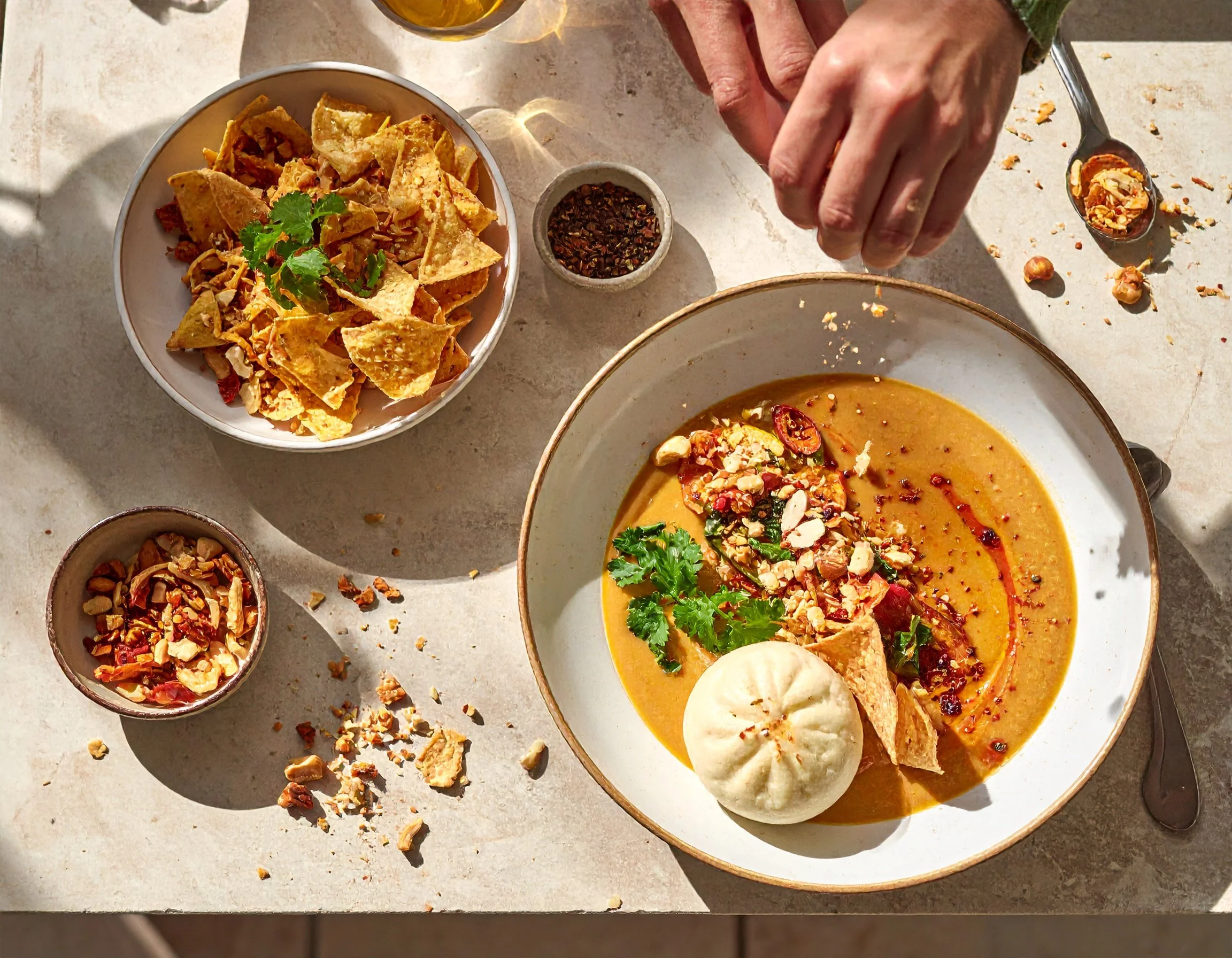
Achieving the Perfect Crunch — A Guide to Textural Contrast in Fusion Cuisine
Crunch is not just a texture. It is sound, rhythm, contrast, and punctuation. It’s the moment a dish becomes unforgettable. In fusion cuisine, where flavors often travel across continents on a single plate, textural contrast becomes a diplomacy. It helps balance unfamiliar flavors, gives structure to bold combinations, and brings excitement to the act of eating.

Mole Meets Curry — The Thousand-Layer Sauces
Some sauces aren’t just condiments; they’re cosmologies. Mexican mole and Indian curry tell stories of time, patience, and inheritance. They reveal the path of slow-cooked archives of trade routes, colonization, and creativity. Each holds within it a world of spice, heat, and memory. When mole meets curry, something extraordinary happens. Their differences, one rooted in roasted seeds and cacao, the other in bright spices and coconut or cream, dissolve into a shared purpose: transformation through layering. Both are acts of faith in the kitchen.

The Ritual of Smoke: Elevating Cocktails with Cedar, Cacao, and Chiles
Smoke is one of the oldest flavors known to humanity; an accident of preservation turned into an art of sensation. From the cedar-planked salmon of Nordic coasts to the earthy cacao and chiles of Mesoamerica, smoke tells stories of fire and patience. When used in cocktails, it becomes a bridge between two worlds: the ancient and the contemporary, the primal and the refined. In Northern Europe, mixologists have long embraced smoke through wood-aged spirits and fire-kissed garnishes.

Empanadas Meet Bao — Crispy, Crunchy & Soft
Across continents, cooks have been wrapping flavors in dough for centuries. In Latin America, the empanada is golden and crisp, a celebration of corn or wheat, sometimes fried, sometimes baked, always inviting. In China, the bao is soft and white, steamed instead of browned, rising gently rather than crackling open. Both are portable, generous, and social. Both embody hospitality, something to be grabbed from the street, shared with friends, or served in abundance at a family table. When empanadas meet bao, they discover that despite their differences, they speak the same language: the joy of holding warmth in your hands.

The Art of Infused Oils: Simple Techniques for Global Flavor and Fusion Cooking
Infused oils are small wonders: simple to make, endlessly versatile, and capable of transforming a dish with just a spoonful. They act as your flavor shortcuts, the quiet backbone of fusion cooking. A citrus-zested sunflower oil for a quick mayonnaise, a chipotle-olive oil for grilled vegetables, or a cardamom-argan oil to swirl into yogurt, each one holds a memory of place and aroma. Infused oils are like bottled memories — quick to make, slow to forget.