The Grinder
The Mechanics of Particle Reduction
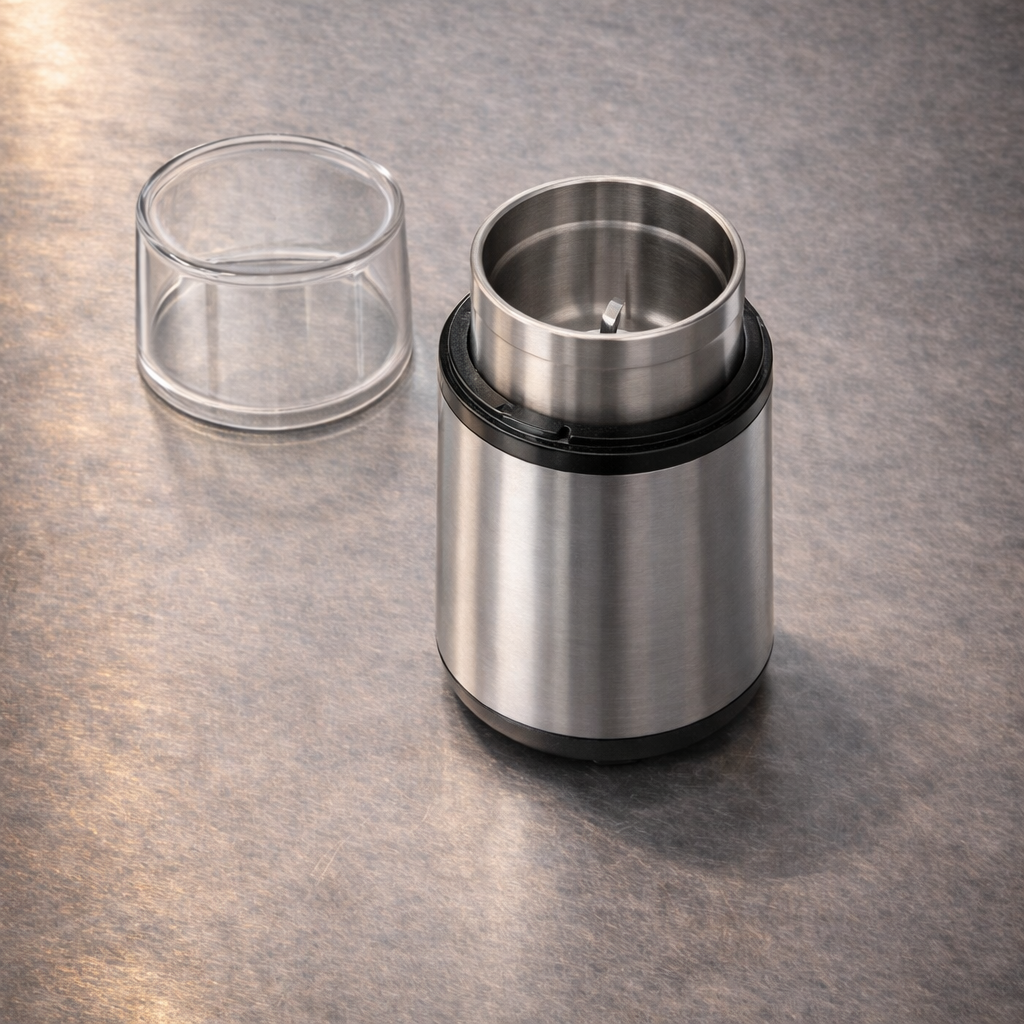
Grinding is one of the oldest mechanical transformations in cooking. For centuries, humans have developed devices that multiply physical force in order to break down grains, spices, seeds, and nuts. From river-powered stone mills to hand-cranked spice grinders and modern electric devices, the principle remains the same: rotation and pressure reduce ingredients into smaller particles.
Unlike the mortar and pestle, which rely on direct manual crushing, grinders introduce a mechanical system that performs the work through repeated rotational movement. This system allows ingredients to be processed more quickly and often more consistently, making grinders essential tools for transforming hard ingredients into powders, granules, or pastes.
Function
The primary function of the grinder is mechanical particle reduction. Grinders take solid ingredients and break them down through rotating grinding surfaces. These surfaces may be made of steel, ceramic, or stone. Common ingredients processed in grinders include:
• spices
• coffee beans
• grains
• dried herbs
• seeds
• nuts
Depending on the design of the grinder, the final result may be:
• coarse particles
• fine powders
• textured granules
• thick pastes
In some cases, extended grinding can even transform ingredients into smooth pastes such as nut butters or seed creams.
Mechanical Grinding Systems
The defining characteristic of the grinder is its mechanical system. Unlike the mortar and pestle, which operate through direct hand pressure, grinders rely on a mechanism that converts motion into grinding force. These mechanisms may be powered by:
• human hands
• animals
• flowing water
• electric motors
For example, traditional stone mills used water wheels or animal power to rotate large grinding stones. Modern kitchen grinders use electric motors or hand-cranked mechanisms to achieve the same result. In every case, the system multiplies the force applied to ingredients, allowing harder materials to be processed efficiently.
Geometry
Grinders typically operate using two surfaces that rotate against each other.
Burr Systems
Many spice and coffee grinders use burr mechanisms, where two abrasive surfaces grind ingredients between them. The distance between the burrs determines the size of the final particles. This allows cooks to control the result: coarse, medium, or fine.
Stone Grinding Plates
Traditional mills often use large stone disks that rotate against each other. These systems are still used today in some traditional food preparations, such as grinding grains or cacao.
High-Speed Blade Grinders
Some grinders use rotating blades to break ingredients apart through rapid impact. While fast, these systems may produce less uniform particle sizes compared to burr-based grinders.
Materials
Grinding mechanisms are typically made from durable materials that resist abrasion. Common materials include:
• hardened steel
• ceramic burrs
• granite grinding stones
• cast iron components
These materials ensure that the grinder can withstand repeated use with hard ingredients such as grains or spices.
Speed and Heat
One important characteristic of grinders is speed. Because grinders often operate rapidly, friction can generate heat during grinding. This heat can affect volatile aromatic compounds in spices and herbs. For this reason, slower grinding methods sometimes produce different flavor profiles than high-speed grinders. This is one reason why some cooks still prefer mortar-and-pestle techniques for certain preparations.
The Grinder in Modern Kitchens
Grinders are widely used in professional kitchens because they allow cooks to process ingredients quickly and consistently. Examples include:
• grinding spices for blends
• milling grains into flour
• producing coffee grounds
• making nut butters and seed pastes
Modern grinders often include adjustable settings that allow cooks to control the final texture of the ingredient.
Choosing the Tool
Different grinding tasks require different types of grinders. Small spice mills are ideal for herbs and dry spices. Burr grinders allow precise control over particle size. Larger stone mills are used for grains or cacao. Selecting the appropriate grinder depends on:
• ingredient hardness
• desired texture
• production volume
Many kitchens maintain multiple grinders to accommodate different ingredients and textures.
Common Misconceptions
One misconception is that grinders produce the same results as manual crushing. In reality, grinders operate much faster and can generate heat that alters the release of aromatic oils. Another misunderstanding is that grinders always produce uniform particles. Some grinding systems create more variation in particle size depending on their design. Understanding the grinding mechanism helps cooks choose the appropriate tool for the desired result.
Closing Reflection
Grinding is a transformation that lies at the heart of many culinary traditions. Through mechanical force, grinders break down hard ingredients into powders, granules, or pastes, releasing new aromas and textures. From ancient stone mills to modern electric spice grinders, these instruments extend the cook’s ability to transform ingredients efficiently. They demonstrate how mechanical ingenuity can amplify one of the oldest actions in cooking: the simple act of grinding.