Rosa de Jamaica: The Crimson-Scarlet Infusion
A Flower That Travels Through Water
Few ingredients embody both beauty and depth like hibiscus flower: tart, red, and aromatic. Known across Latin America as rosa de Jamaica, it is more than a drink ingredient; it’s a color, a mood, and a ritual. From the mercados of Oaxaca to Guatemalan kitchens, from West African “bissap” to Caribbean “sorrel,” the hibiscus flower has traveled across oceans and time, dried petals carried in spice sacks, steeped in kettles, and poured into glasses for refreshment or celebration.
Every culture it touches reinvents it, with ginger, with mint, with sugar, with clove, and always, its deep crimson hue remains unmistakable: the color of joy steeped in patience. In every cup of hibiscus, there’s a memory of sunlight turned liquid. It’s the taste of earth and flower meeting water and time. Whether poured from a clay jar in Oaxaca or sipped as a chilled spritz on a Mediterranean terrace, hibiscus reminds us that color is nourishment and that some flowers are meant to be drunk.
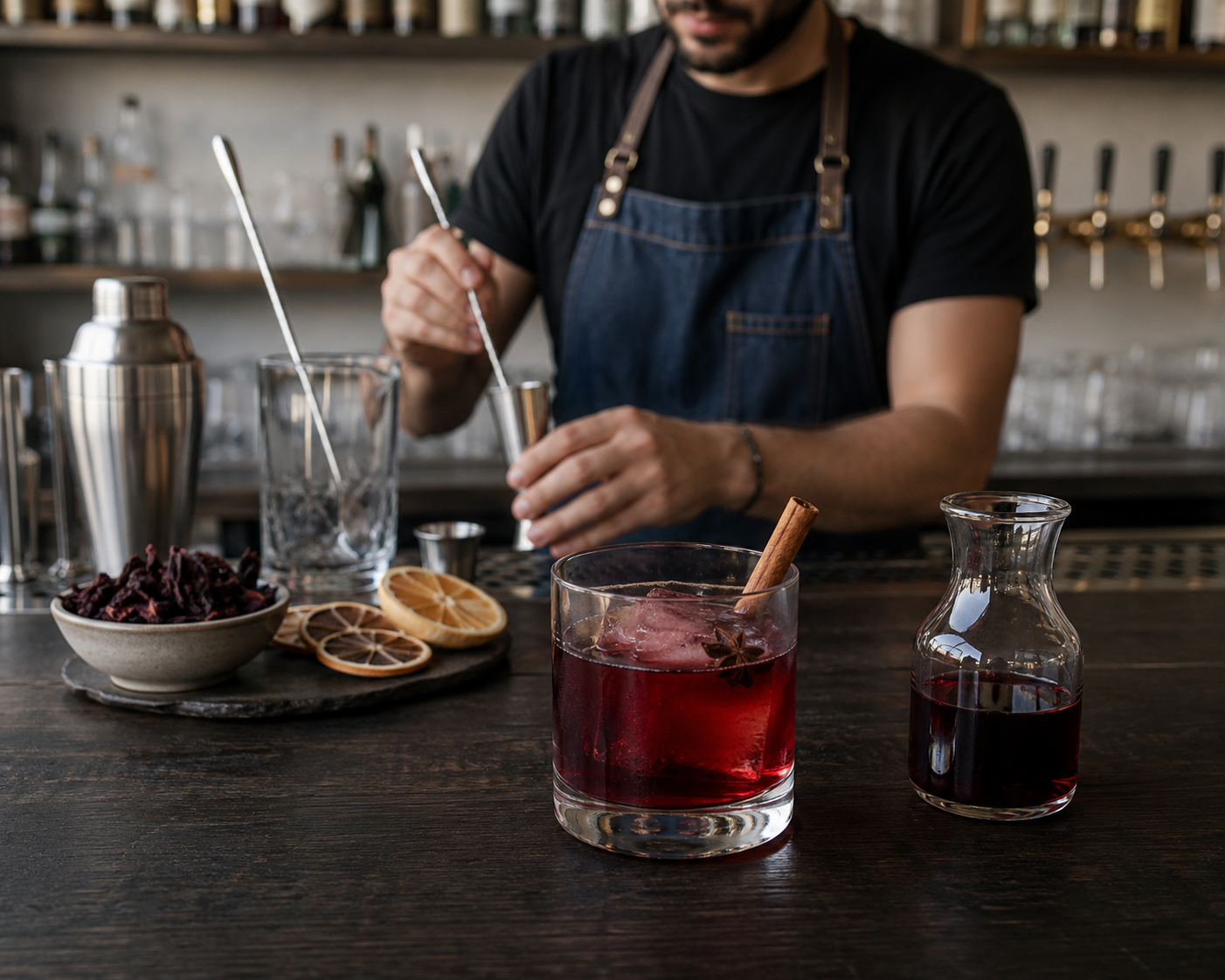
Hibiscus drinks are all about presentation — the shimmer of ruby liquid against ice, the aromatic swirl of spice and fruit. Serve in glass pitchers to show the color, add slices of lime, mint leaves, or edible flowers. If you’re mixing cocktails, rim glasses with chili-salt or sugar, and always add a few dried petals for texture and charm.
The Fusion Logic — Color, Acidity, and Versatility
Hibiscus is both an ingredient and a medium:
It colors water and spirits a ruby tone.
It acidifies, balancing sweetness.
It infuses, carrying the memory of any spice or fruit steeped with it.
It’s ideal for both culinary and mixological experiments: teas, syrups, pickles, glazes, cocktails, and marinades. Its acidity mimics citrus, its perfume replaces fruit, and its intensity pairs beautifully with herbs, chiles, and spirits.
Nine Ways to Bring Hibiscus Flower Into Your Kitchen and Glass
1. Classic Agua de Jamaica
Dried hibiscus petals simmered with sugar, cinnamon, and clove — strained, chilled, and served over ice in the Mesoamerican base formula.
2. Spiced Caribbean Sorrel Punch
Hibiscus with fresh ginger, allspice, and a splash of rum. Garnish with orange zest for brightness.
3. Bissap Fresco with Mint and Lime
West African inspiration: steep hibiscus with mint, lime peel, and sugar. Serve icy cold.
4. Hibiscus-Pineapple Agua Fresca
Simmer petals with pineapple peel and a touch of cardamom. A tropical infusion — tart and fragrant.
5. Hibiscus-Chili Syrup
Boil equal parts sugar and water with hibiscus and dried chile de árbol. Use for cocktails, marinades, or glazes.
6. Hibiscus-Cucumber Cooler
Combine hibiscus tea with cucumber juice, lime, and a pinch of salt. Light, savory, revitalizing.
7. Hibiscus Margarita or Spritz
Shake tequila or gin with hibiscus syrup and lime; top with sparkling water or prosecco. Vibrant and floral.
8. Hibiscus-Vanilla Iced Tea
Steep hibiscus with split vanilla pods and orange peel. Sweeten lightly — elegant and aromatic.
9. Pickled Hibiscus & Onion Relish
Reuse steeped petals by pickling them with vinegar, sugar, and thin red onion — a tart garnish for tacos or grilled meats.
Cultural Note — A Global Petal
Hibiscus sabdariffa, native to Africa, spread through trade routes into the Caribbean, the Middle East, and the Americas. In Senegal and Nigeria, it’s known as bissap or zobo; in Egypt and Sudan, karkadé is served both hot and cold. In the Caribbean, it becomes sorrel, often spiced with ginger and rum during the holidays. In Mexico and Guatemala, agua de Jamaica is the midday fresco that balances the heat of a meal — tart, refreshing, and deeply familiar. This single flower connects continents through color, acidity, and celebration.
Page-to-Plate Insights
Use them to spark action, refine your notes, and carry your creative process from the open page to a served table.
Observe how hibiscus behaves: in water, it gives clarity and brightness; in alcohol or syrup, it deepens and concentrates. Write down how each liquid medium changes its expression — water, tea, spirit, vinegar.
Try creating a hibiscus trio: one drink, one condiment, one syrup — and note how color and acidity connect them.