The Architecture of Crunch: Plant-Based Savory Elements
9 Plant-Based flavor & TEXTURAL Essentials
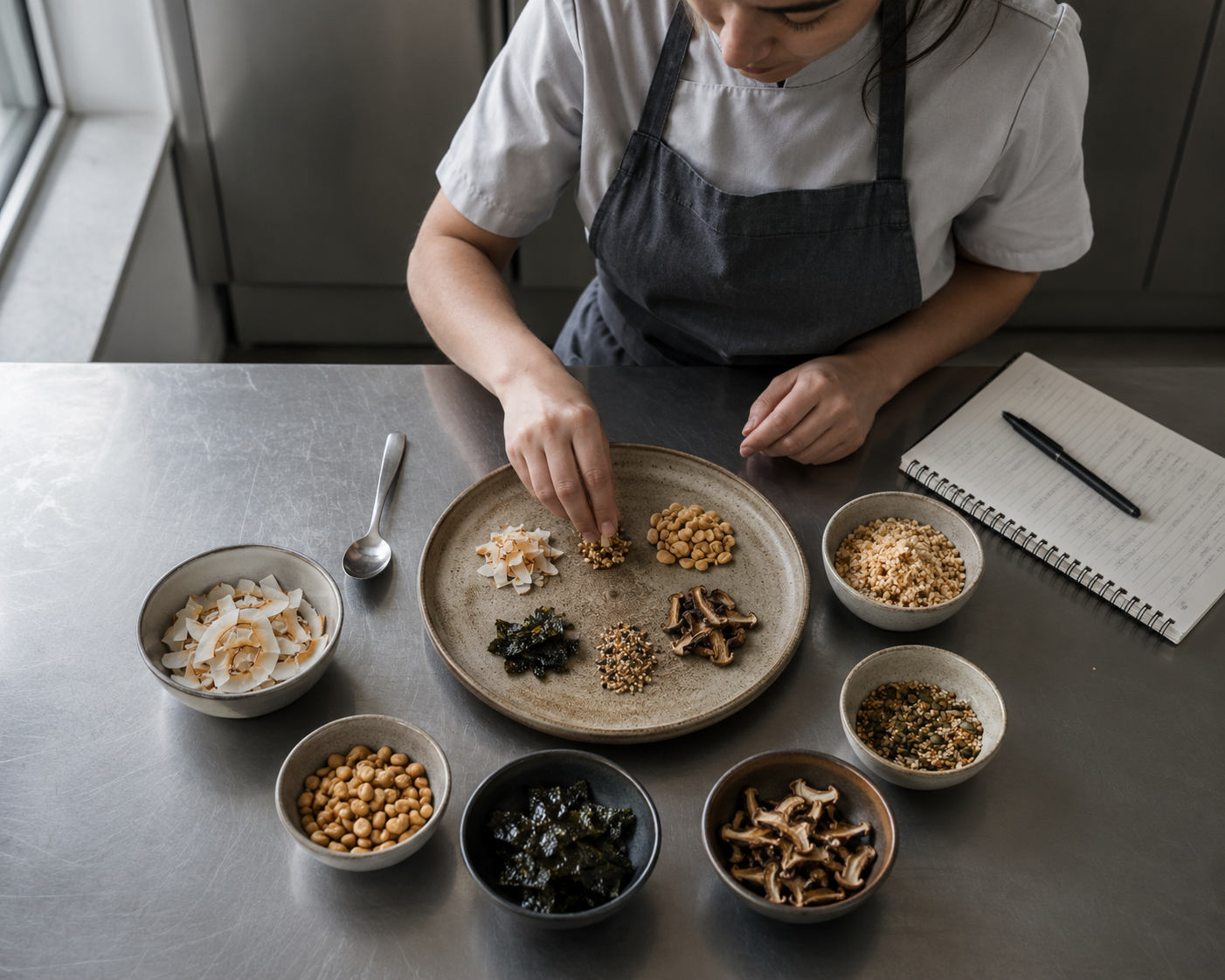
The Search for Crunch, Fat, and Aroma
Every cook knows the truth: A bowl becomes complete and succulent the moment you add a crisp, savory topping. Traditionally, bacon plays this role: salty, fatty, aromatic, and crunchy. But plant-based cooking has its own ways of creating that same magic. Through dehydration, pan-frying, roasting, marinating, and caramelization, you can turn simple ingredients into deeply savory, crispy elements that give any bowl a final touch of brilliance.
Let us begin with a small but important clarification: nothing truly replaces bacon, and that is not our intention here. When cooks say “bacon-like,” we are not promising identical flavors. We are talking about an idea: the crispness, savoriness, aroma, and pleasure that bacon brings to a dish; the way it finishes a bowl, adds contrast, and creates that irresistible crunchy moment.
Plant-based ingredients cannot copy bacon, but they can evoke it. They can deliver the same textural punch, the same salty-smoky brightness, and the same sense of completeness when sprinkled over grains, noodles, vegetables, or salads. This is not about imitation. It is about recreating the joy of contrast: soft and crunchy, earthy and toasted, comforting and savory.
Nine Plant-Based “Bacon-Like” Crisp Elements
Each one brings a different form of umami, aroma, and structure.
1. Shiitake Bacon
Technique: Thin slices of shiitake sautéed with soy, smoked paprika, and a little neutral oil until intensely crisp.
Profile: smoky, earthy, chewy-crisp.
Works well with: noodle bowls, tofu bowls, rice bowls.
2. Smoked Paprika Potato Shards
Technique: Skinny potato slices tossed with olive oil, smoked paprika, and salt; baked until glassy and crisp.
Profile: smoky, salty, brittle.
Works well with: grain bowls or Mediterranean bowls.
3. Crispy Shallots (Asian-Style)
Technique: Shallots sliced thin, fried at medium heat until golden, drained, and salted.
Profile: oniony, sweet, aromatic crunch.
Works well with: noodle bowls, soups, and salads.
4. Coconut Bacon
Technique: Large coconut flakes tossed with soy, maple syrup, and smoked salt; baked to crisp.
Profile: lightly fatty, smoky-sweet, brittle.
Works well with: Asian bowls, fruit bowls, and tofu dishes.
5. Sweet Pepper Skin “Cracklings”
Technique: Pan-char peppers, peel the skins, dry them, or bake until crisp.
Profile: smoky, vegetal, delicate.
Works well with: Latin bowls, grains, eggs (plant-based versions).
6. Tempeh Crisps
Technique: Thinly slice tempeh and marinate in soy, vinegar, garlic, and smoked chili; pan-sear until crispy.
Profile: nutty, meaty, substantial.
Works well with: high-protein bowls.
7. Nori Crisp Strips
Technique: Brush nori with sesame oil, soy, and maple; bake until crisp.
Profile: salty, oceanic, deeply umami.
Works well with: noodle bowls, rice bowls, tofu.
8. Peanut–Sesame Brittle
Technique: Quick stovetop caramel with peanuts, sesame, soy sauce, and chili flakes; cooled and cracked into shards.
Profile: spicy, nutty, sweet-salty.
Works well with: Asian bowls, roasted vegetables.
9. Chickpea Shards (Roasted)
Technique: Press cooked chickpeas slightly flat, then roast with oil, cumin, and paprika until crisp.
Profile: crunchy, earthy, protein-rich.
Works well with: Mediterranean bowls.
Use Them — Nine Fusion Bowl Ideas
Below are nine bowl ideas, each one finished with one or more of the crisp elements above.
1. Guatemala–Mexico Bowl
Base ingredients: achiote rice, grilled corn, black beans, roasted tomatoes, avocado.
Crisp element: pepper skin cracklings.
Sauce: jalapeño–cilantro–lime dressing.
2. Peruvian–Caribbean Bowl
Base: quinoa, roasted sweet potato, sautéed plantains, pickled red onion.
Crisp: coconut bacon.
Sauce: aji amarillo mayo (vegan).
3. Colombian–Oaxacan Bowl
Base: cilantro rice, beans, roasted mushrooms, nopal strips.
Crisp: shiitake bacon + peanut–sesame brittle.
Sauce: lime–garlic–paprika vinaigrette.
4. Greek–Lebanese Bowl
Base: couscous, roasted eggplant, cucumber, chickpeas, fresh herbs.
Crisp: chickpea shards.
Sauce: tahini–lemon sauce.
5. Italian–Moroccan Bowl
Base: farro, roasted peppers, tomatoes, olives, preserved lemon.
Crisp: smoked paprika potato shards.
Sauce: harissa–olive oil.
6. Spanish–Turkish Bowl
Base: orzo, chickpeas, charred zucchini, parsley, grilled onion.
Crisp: tempeh crisps.
Sauce: smoked tomato–paprika–garlic sofrito.
7. Korean–Japanese Bowl
Base: rice, sautéed greens, tofu, kimchi, pickled radish.
Crisp: crispy shallots + nori crisp strips.
Sauce: gochujang–sesame dressing.
8. Vietnamese–Thai Bowl
Base: rice noodles, herbs, roasted mushrooms, cucumber, carrot.
Crisp: shiitake bacon.
Sauce: nuoc cham with lime and chili (plant-based version).
9. Chinese–Malaysian Bowl
Base: jasmine rice, bok choy, tempeh, roasted cauliflower, cashews.
Crisp: peanut–sesame brittle.
Sauce: black vinegar–soy–ginger dressing.
Cultural Note — Plant-Based Crunch is a Global Language
Plant-based “bacon” is not a trend — it’s an evolution of ancient cooking instincts. Cultures everywhere have long used vegetables, grains, legumes, and seeds to create crisp, savory elements:
Fried shallots in Southeast Asia
Chicharrón de harina in Mexico
Roasted pulses in India
Vegetable crisps in the Mediterranean
Nuts and seeds in African and Middle Eastern dishes
Crispness is universal. Its forms change, but its purpose remains the same: contrast, aroma, pleasure.
Page-to-Plate Insights
Use them to spark action, refine your notes, and carry your creative process from the open page to a served table.
Choose one of the nine crispy elements and test it in three variations: lightly cooked, deeply caramelized, and borderline “burnt” (within reason!). Write down how aroma, sweetness, bitterness, and crunch change with time and temperature.
Then add each version to the same bowl and observe how it transforms the whole dish.