
RENATO OSOY // CV & CULINARY trajectory
Creative chef, researcher, and founder of Culinary Collector. My work focuses on developing structured methods for culinary creativity, including formula-based experimentation, flavor systems, and research-driven cooking practices. Originally trained and working across artistic and curatorial disciplines, my approach to cooking is both practical and deeply influenced by process, documentation, and creative systems. Through Culinary Collector, I develop tools, methods, and educational frameworks that help cooks evolve their authorship.
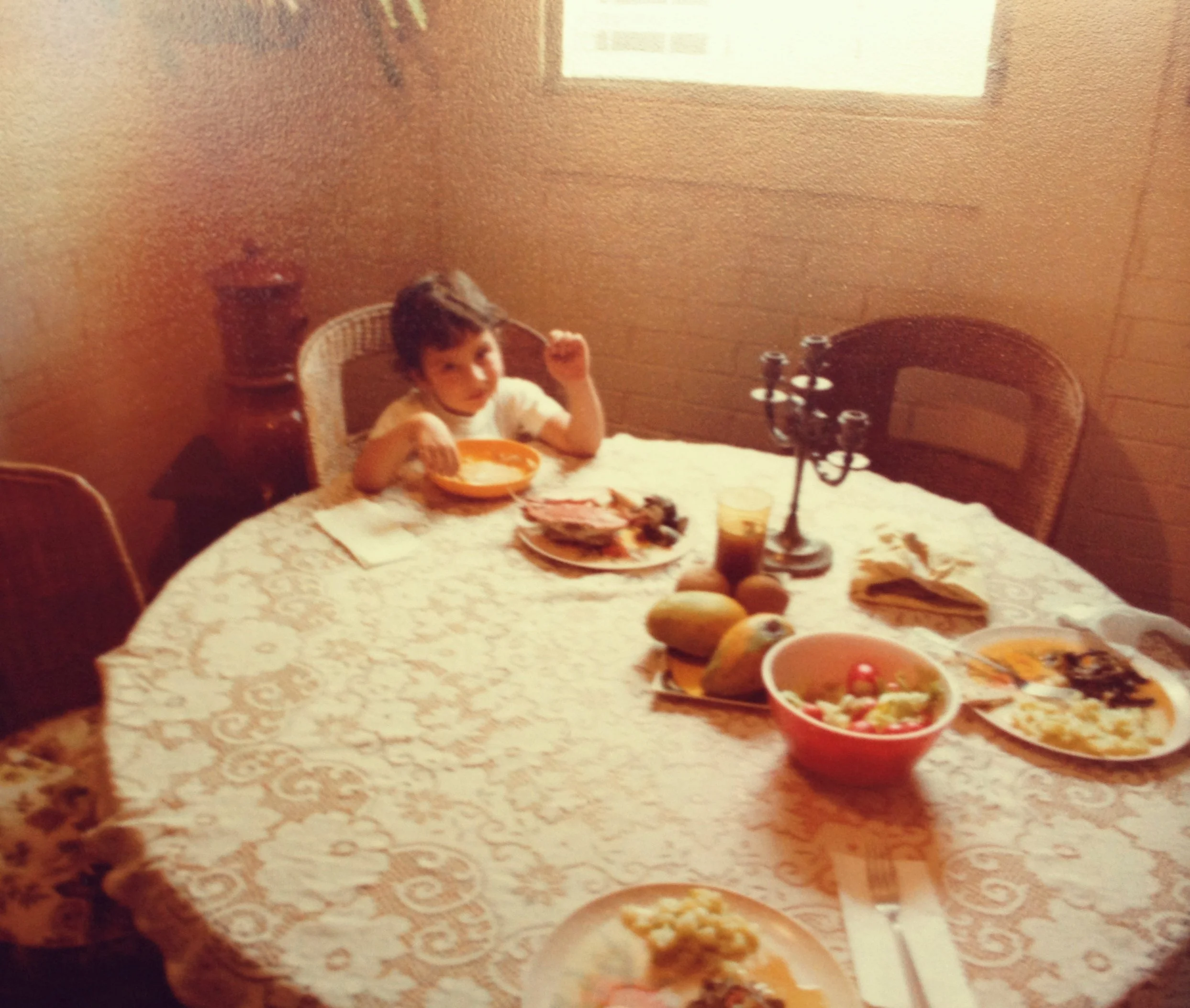
I did not choose the kitchen. The kitchen chose me long before I understood what it meant to choose anything. My earliest sensory memories relate to the smell of moisture. Guatemala City’s late 70’s foggy mornings, the markets at dawn, metal tables sweating, fish blinking in crushed ice, the smell of salt, iron, and citrus suspended in thick air. Vendors shouting. Knives striking wood with a sharp rhythm. My mother is walking ahead of me holding her wicker basket. My eyes are scanning. Coconut water in a big glass jar. But not just the water. The heart of the coconut, the seed. That soft, porous embryo floating inside the glass, slightly sweet, slightly resistant to the teeth. I remember the way it yielded slowly, like something secret being revealed. I insisted on having it every time. Even then, I wanted what was hidden inside the obvious.
I sometimes wonder if that was the first time I felt that what nourishes you is rarely the surface. I remember lime burning my tongue as I drank it straight, as freshly squeezed juice, testing how much acidity my mouth could endure. I remember live clams split open and immediately drowned in citrus, flesh tightening in seconds. I remember eating fish eyes, organ meats, and textures others avoided. Intensity did not frighten me. It steadied me. But intensity also isolates you. When I shared fish candy from a Japanese friend at school and another child cried from disgust, I learned something quietly painful: not everyone tastes the world the way you do. Curiosity can be misunderstood. Pleasure can look strange. For a moment, I considered softening. I did not.
The Kitchen Was Always There
Mid-adolescence shifted my posture. I began watching more what I was eating, and not with a dietary concern. In the back of the “San Pancracio" bakery owned by a friend’s family, I stood under warm yellow lights while dough was rolled in silence. Yeast is breathing softly in the air. Hams hanging in smoke rooms, wood perfume heavy in the lungs. Milk left overnight, cream rising quietly to the surface, later transformed, I remember graving a spoonful of that churned butter directly into my mouth; soft, aromatic, densely foamy, almost fragile. Later while living in Denver as a young adult, I first smelled crushed lemongrass and torn kaffir lime leaves, and something in me expanded. There were flavors I did not know how to name. I felt excitement, and inadequacy. How much was I missing? How many worlds existed beyond the ones I had tasted? I understood then that the more you learn, the more you see what you do not know.
My turning point did not arrive in a glorious way. It arrived in restlessness. Back in Guatemala in 2000, I spent long hours in “Camille”, a friend's restaurant, sitting in the kitchen simply watching. Butter foaming. Garlic browns too quickly if you lose attention. Fish skin blistering under heat. The choreography of service: wipe, plate, send. I wanted to be inside that rhythm. When the chef handed me an apron, the fabric felt heavier than it should have. The first time I cut fish professionally, my hands hesitated. The blade did not glide as I imagined it would. The bread dough stuck. Timing faltered. Desire is not the same as skill. There were nights I lay awake asking myself whether fascination was enough to justify the risk of starting over. He told me to go to culinary school. So I left.
The Escola de Restauració i Hostaleria in Barcelona was first. Then Paris in 2003, at Le Cordon Bleu. For me going to cooking school was an amazing opportunity; stainless steel surfaces reflecting fluorescent light. Stocks simmering for hours. Sauces were reduced until they coated the back of a spoon with exact thickness. There, ego dissolves quickly. You think you know how to cook, until technique exposes your weaknesses. Knife cuts must be identical. Temperatures exact. Reductions controlled. I failed quietly many times. Failure did not humiliate me. It clarified me. In Michelin-starred kitchens such as Restaurant Hisop and Restaurant Christophe, I witnessed two realities. In one, prestige masked cruelty; shouting, chaos, tension thick as steam. I questioned whether excellence required humiliation. I learned that it does not. Excellence requires structure. Cruelty is insecurity disguised as rigor.
Being Passionate about learning

Previous to culinary training, another form of training unfolded. Photography while I lived in Denver in 1996. Years later after taking a break form the steaming kitchens, I enrolled in the Fine arts program in Antwerp at the Royal Academy of Art in 2009. Later I went to complete a Master’s in Artistic Research at the University of Amsterdam. In the art world, waiting for inspiration is a fantasy. Work must exist. Exhibitions must open. Ideas must materialize even when doubt lingers. There were mornings in those studios when I questioned whether I belonged there at all. Whether seriousness was something you earn, or something you simply decide to embody. That question followed me into kitchens. Over time, I realized belonging is built through repetition. Research. Experiment. Document. Polish. This framework became an anchor.
Years later in 2021, collaborating on what would become The Black Flavor, we stood in front of a massive solar-thermic dehydrator humming under steady sun of the Guatemalan desert. Garlic blackened slowly. Pineapple darkened into something almost molasses-like. Corn deepened into unexpected umami. Some experiments were failures. Entire trays discarded. The smell of burnt sugar lingered like an accusation. There is a particular silence that comes after something you believed in fails. You can choose to interpret it as defeat. Or as instruction. We chose instruction. Slowly, depth emerged. Sweetness transformed. Vegetables tasted aged, concentrated, and almost philosophical. Pleasure returned , not naive pleasure, but earned pleasure.
Around that period, I was leading a couple of restaurants in Guatemala. I could immediately feel when a kitchen’s rhythm was broken. Equipment misplaced. Air too thick. Voices tense. The menu and the space are misaligned. Vision collides with budgets. Standards collide with fatigue. You cannot control everything. I learned that leadership is less about imposing perfection and more about cultivating coherence and listening to what needs to be listened to. I remembered that years earlier, at “The College Hotel” in Amsterdam, I had been teaching interns and would shape croquettes beside them when they lost their discipline. Not to correct them from above, but to demonstrate that uniformity is respect; respect for the guest, for the ingredient, for the craft.
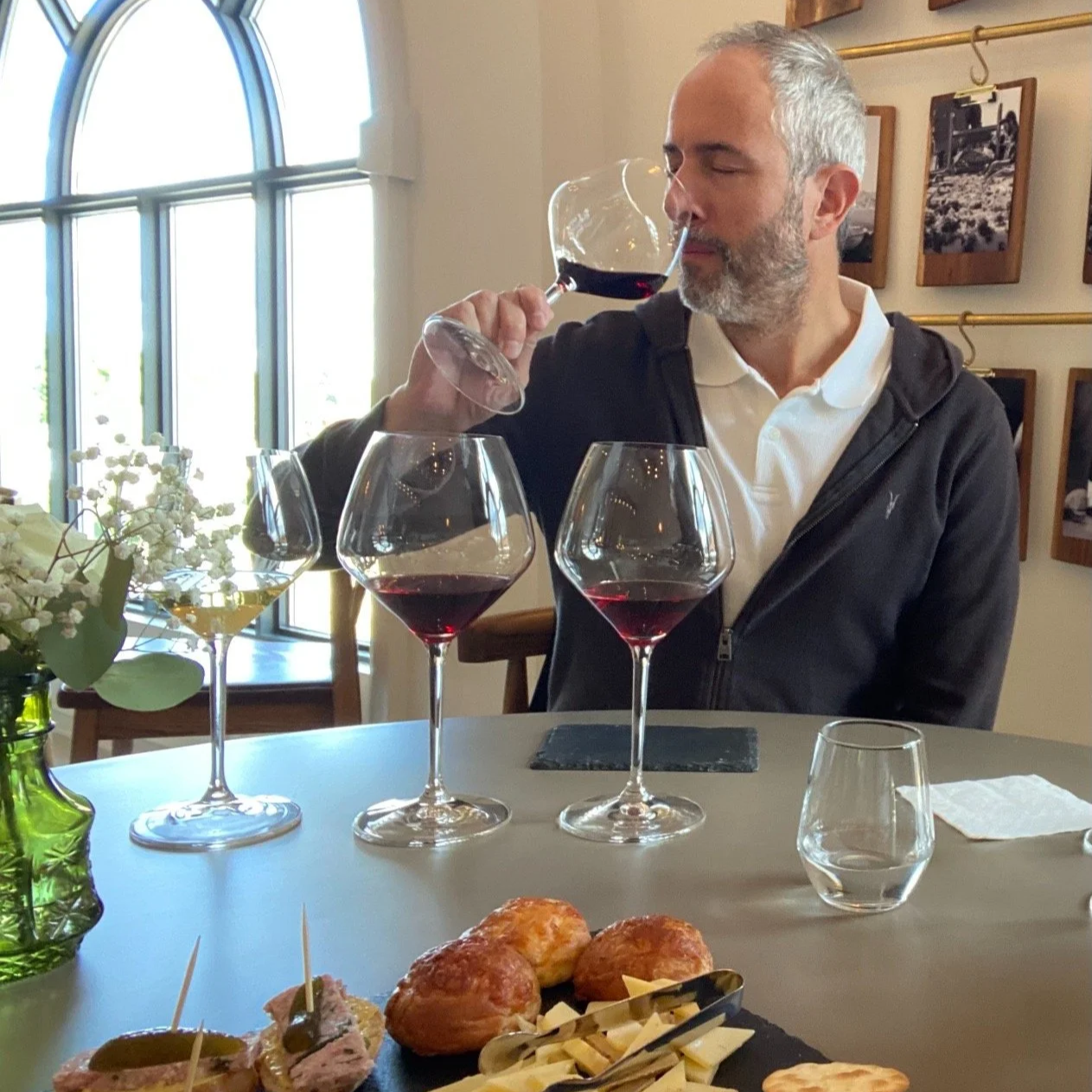
Culinary Collector did not appear as a strategy. It condensed from years of tension between curiosity and structure. The child who sought coconut hearts. The student was humbled by the technique. The cook who endured chaos. The experimenter who documented failure without flinching. All of it converged. Culinary Collector is my attempt to make culinary creativity accessible and sustainable, to ensure that passion does not burn out, that curiosity has scaffolding, that making excellent food consistently is a pleasure preserved through discipline. It is not about doing things my way. It is about building a way that works.
If I search for the thread that binds it all, it is this: I have always been drawn to transformation. Milk to butter. Lime to cured flesh. Garlic to blackened sweetness. Uncertainty to clarity. The alchemy of things, the alchemy of life. There were moments of hesitation. Of questioning. Of imagining the path would be simpler than it was. But I am still here. Still tasting. Still adjusting. Still learning that intensity without structure collapses, and discipline without pleasure becomes hollow. For me, the kitchen was never just a room; in a restaurant or at home. The kitchen is a place for inspiration and transformation, and the table a place of joy to share that excitement, with those that we love and care.
Renato Osoy
The Culinary collector
PROFESSIONAL PROFILE
I am an interdisciplinary professional whose work has developed across food, artistic research, education, cultural production, and entrepreneurship. For more than twenty years, I have worked as a chef, educator, researcher, curator, institutional leader, and project developer, creating initiatives that connect ideas, people, organizations, products, and public experiences.
My trajectory has given me complementary ways of approaching complex work. Professional cooking taught me technical discipline, repetition, culture, and execution. Art and artistic research taught me how to work with uncertainty, structure questions, and develop knowledge through creative processes. Curating and education strengthened my ability to connect ideas with context, audiences, and learning, while institutional leadership, hospitality, and entrepreneurship taught me how projects meet teams, operations, markets, and real-world constraints.
In recent years, these areas have increasingly converged in my work in food through culinary research and development, product innovation, education, creative methodology, and entrepreneurial ventures. I have now reached a point where I want to deepen that convergence and strengthen my ability to operate at the level of food systems, innovation, industry, networks, and transformation.
AREAS OF EXPERTISE
Research, Innovation & Creative Methodologies
Research-Based Project Development · Interdisciplinary Inquiry · Creative Process & Methodology · Experimentation & Refinement · Translating Research into Practice
Food Development, Hospitality & Product Innovation
Culinary R&D · Recipe Formulation & Testing · Menu & Experience Development · Restaurant Operations · Food-Service Applications · Commercial Development
Education, Knowledge Transfer & Professional Development
Program Design · Curriculum & Methodology Development · Adult Learning · Mentorship · Team Training · Knowledge Translation
Strategy, Leadership & Project Development
Vision-to-Execution Thinking · Organizational Development · Team Leadership · Stakeholder Engagement · Network Building · Strategic Communication
SELECTED PROFESSIONAL EXPERIENCE
CEO & General Manager
Restaurantes Los Tres Tiempos
Antigua Guatemala | 2020–2024
Led the operations and development of a high-volume restaurant group with approximately 60 staff members, combining organizational leadership, hospitality management, culinary development, team training, and quality control.
Directed day-to-day operations across kitchen, service, management, and guest experience.
Developed organizational systems, internal training structures, and clearer standards for team performance and accountability.
Led menu development and supported the evolution of the restaurant's culinary identity, as a contemporary expression of Guatemalan cuisine.
Institutional Development, Content & Program Direction
FUNBA, Fundación Nacional para las Bellas Artes y la Cultura / MAG, Museo Arte Guatemala
Antigua Guatemala | 2018–2020
Contributed to the development and institutionalization of a cultural foundation and emerging museum project, working across strategy, programming, education, communication, exhibitions, and public engagement.
Participated in the conceptual and organizational founding and initial development of FUNBA and the future Museo Arte Guatemala. Helped translate a private collection and emerging institutional vision into a more coherent public cultural project.
Designed educational and public-engagement strategies connecting institutional content with different audiences.
Directed content development for the FUNBA Cultural Channel, including structures, narratives, scripts, and audiovisual communication. Co-curated exhibitions and developed associated educational and public programs.
Program Designer, Coordinator & Educator
Fundación Paiz
Guatemala City | 2015–2018
Designed and coordinated long-form educational initiatives developed in connection with the Guatemala Art Biennial, creating frameworks for the professional and intellectual development of emerging artists, curators, educators, and cultural practitioners.
Designed and coordinated the one-year Agentes Culturales diploma program. Designed and coordinated the Laboratorio de Arte Contemporáneo educational program.
Developed conceptual frameworks, curricula, learning methodologies, workshops, and participant progression.
Worked with invited specialists and institutions to connect local participants with broader local and international professional perspectives.
Independent Consultant, Educator & Mentor
Montréal / Online / International
2020–Present
Work with individuals and organizations across culinary, creative, and cultural fields, supporting project development, professional positioning, educational processes, and the translation of ideas into actionable structures.
Provide one-to-one mentorship and strategic guidance for professionals developing creative practices, projects, and career directions.
Consult on restaurant concepts, culinary development, menu thinking, kitchen organization, and educational initiatives.
Design frameworks that help individuals move through research, decision-making, development, execution, and feedback.
Chef Instructor & Kitchen Supervisor
The College Hotel
Amsterdam, The Netherlands | 2005
Worked in a professional hospitality training environment where students from culinary and hotel-management schools completed practical placements within an operating hotel and restaurant.
Oriented and supervised students entering professional kitchen environments, often for the first time.
Demonstrated culinary techniques and supported students through direct observation, repetition, correction, and feedback. Helped developing cooks understand the transition from classroom learning into professional practice.
Selected Professional Restaurant Experience
Europe & Latin America
2004–2010
Early professional culinary experience developed across restaurant kitchens, stages, culinary demonstrations, private dining, and hospitality projects.
Chef de Partie, Restaurant Christophe *
Amsterdam, The Netherlands | 2005
Worked within a Michelin-starred restaurant environment, strengthening technical discipline, mise en place, timing, organization, and brigade collaboration.
Kitchen Stage, Restaurant Hisop *
Barcelona, Spain | 2004–2005
Completed professional kitchen experience in contemporary Catalan and Mediterranean cuisine, developing familiarity with high-level restaurant standards and the relationship between regional culture and contemporary culinary practice.
Culinary Demonstrations & Private Dining
Antwerpen, Belgium | 2006–2010
Developed and presented culinary experiences for public and private audiences, combining cooking, explanation, hospitality, and direct engagement with guests.
Current PROJECTS & VENTURES
Culinary Collector
Founder & Creative Director | 2022–Present
Independent culinary research and educational platform focused on the creative process of cooks and the development of culinary authorship. Brings together publishing, ingredient research, recipe development, professional practice, and structured methodologies for transforming knowledge into creative work.
The Creative Chef Method
Creator & Lead Developer | 2025-Launching September 2026
A structured methodology for developing culinary creativity and authorship through observation, research, experimentation, repetition, documentation, and refinement. Translates principles from creative practice, artistic research, professional cooking, and education into a practical framework for developing original culinary work.
Recipe Lab
Founder & Culinary R&D Lead | 2026–Present
A culinary research and development initiative focused on recipe testing, auditing, refinement, and development. Applies structured observation, documentation, testing, and feedback to strengthen consistency, execution, and the relationship between a recipe's intended concept and its final result.
The Black Flavor
Co-Founder | Culinary Product Development & Creative Strategy | 2020–Present
Culinary and mixology product venture developed with a food-industry manufacturing partner. My ongoing role includes product formulation, professional applications, creative direction, commercialization strategy, and market development for chefs, bars, restaurants, and hospitality clients. https://theblackflavor.com/
EDUCATION
Academic Education
Research Master's in Artistic Research
University of Amsterdam, The Netherlands | 2012–2014
Advanced research training in methodology, critical inquiry, interdisciplinary practice, and the development of knowledge through theory and creative processes.
BA in Fine Arts
Royal Academy of Antwerp, Belgium | 2009–2012
Contemporary artistic practice combining conceptual development, studio research, critical reflection, and independent project work.
Culinary Education
Diplôme de Cuisine
Le Cordon Bleu, Paris, France | 2003–2004
Professional formation in classical French cuisine, technical discipline, repetition, kitchen organization, and professional standards.
Diploma in Culinary Arts
Escola de Restauració i Hostaleria, Barcelona, Spain | 2002–2003
Professional formation in Spanish and Mediterranean gastronomy, connecting technique with ingredients, regional knowledge, and culinary culture.
Technical Foundation
Photography Studies
Colorado Institute of Art, Denver, United States | 1994–1996
Technical and creative formation in photography, visual communication, image-making, and the disciplined development of professional craft.
R&D & COLLABORATIONS
Available for advisory roles and collaborative projects. I am motivated to connect with the industry, partnering with restaurants, independent creators, and culinary brands to bring their concepts further.
Drawing on both creative intuition and rigorous operational experience, I offer specialized support in:
Culinary R&D & Recipe Development: Translating concepts into standardized recipes, refining flavor profiles, and building dynamic menus your kitchen can consistently execute.
Creative & Operational Direction: Translating conceptual culinary ideas into cohesive, workable realities for your menu or brand.