Miso & Chiles: Umami, Heat & Fermentation
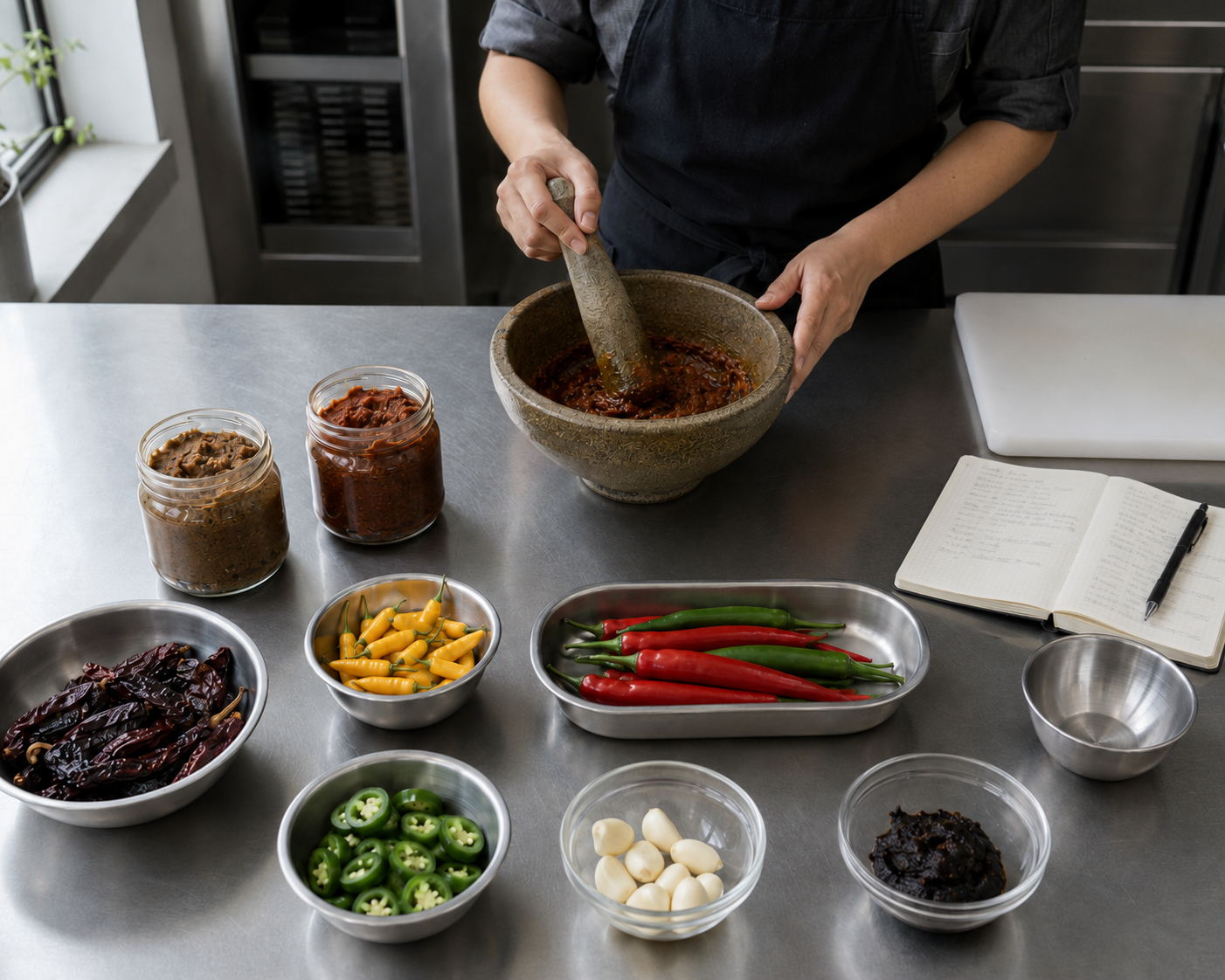
The Meeting of Fire and Fermentation
If there were ever two ingredients destined to understand each other, it’s miso and chiles. Both are born of patience and transformation: beans or grains fermented with koji in one hemisphere, peppers sun-dried and smoked in the other. Both evolved from necessity, preservation, and became instruments of flavor architecture. When these two meet, it’s not a clash. It’s a conversation about depth and brightness, warmth and restraint. Miso brings salt, sweetness, and umami; chiles bring aroma, heat, and emotion. Together, they redefine balance. The idea is simple: let Japan’s quiet fermentation meet Mesoamerica’s fiery complexity, and watch how they teach each other to sing.
When miso and chiles meet, they speak a universal culinary truth: flavor lives in tension. Salt and spice, earth and fire, calm and energy, they are complementary to each other. They remind us that cooking is not about dominance but conversation. So begin with a jar of miso and a handful of chiles. Let them teach you patience and courage. Somewhere between their voices, you’ll find your own.
The Fusion Logic — Umami Meets Heat
Miso is often described as the “fifth taste”, a deep savoriness that lingers. Chiles, on the other hand, activate sensation, not just taste, but temperature, rhythm, and memories. When combined, they can do three things:
Deepen: Miso rounds and mellows the aggression of heat.
Brighten: Chiles wake up the saltiness and sweetness of miso.
Bind: Their shared umami base allows other ingredients — citrus, vinegar, or fat — to link into harmony.
7 Ideas from the Miso–Chile Encounter
This pairing is the foundation for sauces that feel both ancient and modern, delicate and bold. Each idea can be made with any miso and any chile variety; experiment and adjust by instinct, always start with small amounts of chiles.
1. Smoked Chile Miso Glaze
Combine red miso with smoked chipotle paste, mirin, and a drop of honey.
→ Brush over grilled eggplant, salmon, or roasted carrots for a caramelized, umami-spicy finish.
(The miso deepens the smoke, the chile adds lift.)
2. Shiro Miso & Habanero Citrus Dressing
Blend white miso with lime juice, orange zest, minced habanero, and sesame oil.
→ Perfect for salads, tofu, or seared shrimp.
(Sweet meets sharp; light heat meets bright acidity.)
3. Mugi Miso–Ancho Barbecue Sauce
Barley miso, pureed ancho chile, tamarind, and brown sugar reduced until thick.
→ Use on grilled pork or sweet potatoes.
(The earthy ancho mirrors the miso’s grainy warmth.)
4. Miso–Guajillo Butter
Whisk red miso and guajillo paste into softened butter with lemon juice.
→ Melt over roasted corn, lobster, or crusty bread.
(Soft richness balanced by dry fruitiness.)
5. Aged Hatcho Miso Mole
Use Hatcho miso in place of chocolate in a traditional mole base with dried pasilla and mulato chiles.
→ Serve with duck or roasted cauliflower.
(Dark miso adds umami gravity without sweetness.)
6. Yuzu–Chipotle Marinade
White miso, chipotle in adobo, yuzu juice, and olive oil blended smooth.
→ Works on tofu, chicken, or grilled mushrooms.
(Japanese citrus brightens the smoke of Mexico’s mountain kitchens.)
7. Miso–Chile Caramel
Simmer miso, sugar, and a splash of vinegar with finely ground chili powder.
→ Drizzle over fried plantains, roasted nuts, or even vanilla ice cream.
(The ultimate paradox: sweet, salty, spicy, and completely addictive.)
Cultural Note — The Spectrum of Fermentation
In Japan, miso has been made for over a thousand years. Regional styles differ by grain, aging, and salt level:
Shiro miso (white) — mild and sweet, made from rice koji and soybeans, aged briefly.
Aka miso (red) — deeper, saltier, aged longer for intense umami.
Mugi miso — made with barley, rustic and earthy.
Hatcho miso — pure soybean, dark, dense, and bold.
In Mesoamerica, chiles form an equally ancient continuum. From the smoked chipotle to the citrusy habanero, the raisin-like pasilla to the sun-dried guajillo, each carries centuries of selective cultivation and ritual use, from medicinal tonics to divine offerings. Both miso and chiles embody time as an ingredient. They are living archives, proof that fermentation and heat can outlast the seasons and tell stories across oceans.
Page-to-Plate Insights
Use them to spark action, refine your notes, and carry your creative process from the open page to a served table.
Pick one miso and one chile that you’ve never used together. Notice what happens when they meet, how the smell changes, how the flavor evolves.
Write down your proportions, your reactions, and what you might try next.