The Mortar & Pestle
The Mechanics of Flavor Extraction
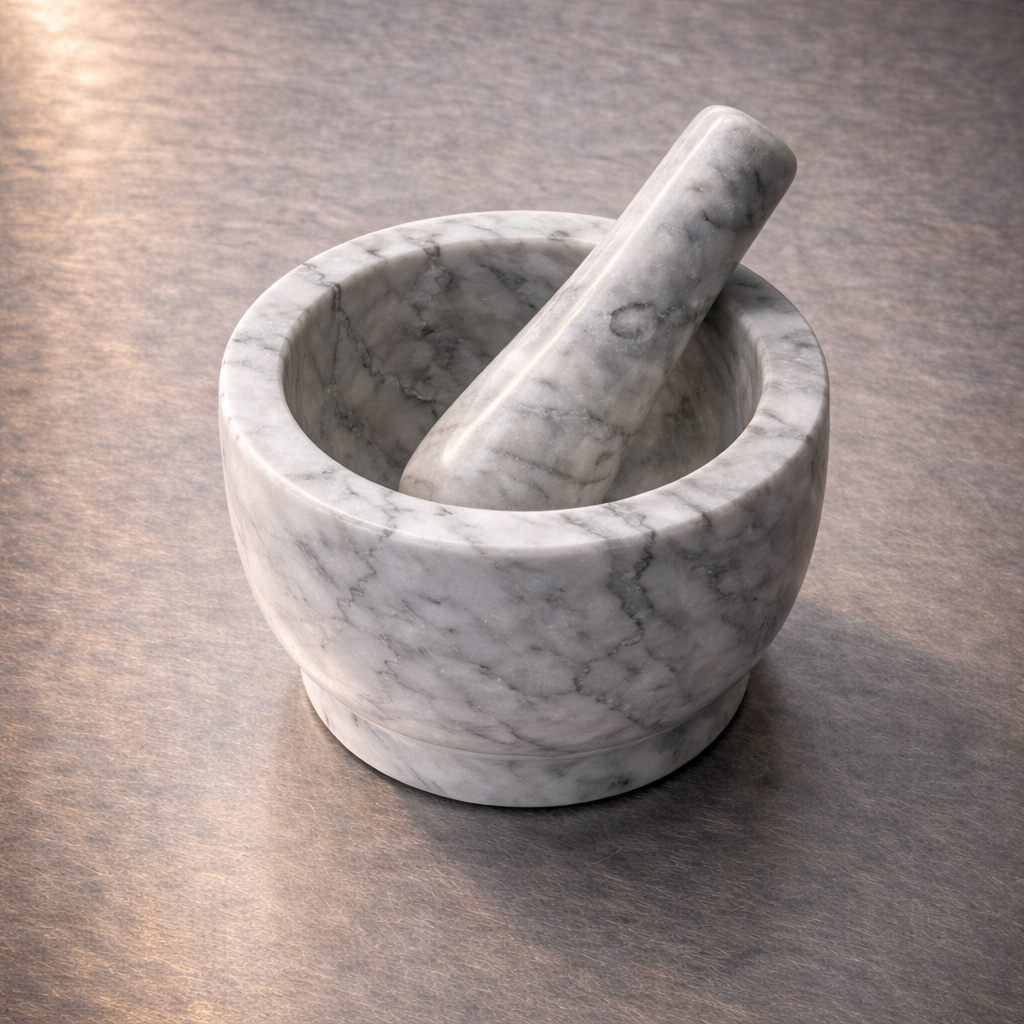
Long before the invention of modern kitchen machines, cooks relied on simple tools to transform ingredients. Among the oldest of these tools is the mortar and pestle. This instrument operates through a simple principle: ingredients are crushed and ground between two surfaces. Through pressure and friction, fibers break down, oils are released, and textures gradually change.
Unlike modern grinding devices, the mortar and pestle work slowly and visibly. The cook observes the transformation directly, adjusting pressure and motion as ingredients evolve from coarse pieces into powders, pastes, or emulsions. For this reason, the mortar and pestle remain one of the most precise and expressive instruments for extracting flavor.
Function
The mortar and pestle are used to crush, grind, and extract flavor from ingredients. By applying pressure and friction, the pestle breaks cellular structures within herbs, spices, nuts, seeds, and vegetables. As these structures break down, aromatic compounds and oils are released. This process produces:
• spice powders
• aromatic pastes
• emulsified sauces
• ground herbs
• crushed seeds and nuts
Because the transformation happens gradually, the cook can control both texture and intensity of flavor extraction.
Geometry
The mortar consists of a bowl-shaped container designed to hold ingredients during grinding. The pestle is a heavy tool used to press, crush, and grind ingredients against the interior surface of the mortar. The geometry of these instruments influences how ingredients move and break down.
Rounded Mortars
Many Western mortars have smooth, rounded interiors that allow ingredients to be crushed and rotated easily. These designs work well for spices, herbs, and emulsified sauces.
Grooved Mortars
Some mortars, such as the Japanese suribachi, contain interior grooves that increase friction during grinding. These grooves help break down fibrous ingredients and seeds more efficiently.
Volcanic Stone Mortars
The Mexican molcajete is carved from porous volcanic stone. Its rough surface grips ingredients during grinding, allowing cooks to crush herbs, chilies, and spices effectively while producing rustic textures.
Materials
Mortars and pestles are made from a variety of materials. The most common include:
• granite
• marble
• volcanic stone
• ceramic
• hardwood
Stone mortars are particularly valued because their rough surfaces create strong friction during grinding. This friction helps crush ingredients efficiently while maintaining control over texture. Different materials also influence the final texture of preparations.
Texture and Flavor Extraction
One of the defining characteristics of the mortar and pestle is the type of texture it produces. Because ingredients are crushed slowly rather than shredded at high speed, the resulting textures often remain slightly coarse and complex. This is particularly important in preparations such as:
• curry pastes
• pesto
• mole
• aioli
• spice blends
In these preparations, crushing the ingredients gradually releases oils and aromatic compounds, producing flavors that are often deeper and more integrated than those produced by mechanical grinders.
Temperature and Friction
Another important difference between mortars and mechanical grinders is temperature. High-speed grinding machines generate heat quickly due to rapid friction and motor energy. This heat can cause aromatic oils to evaporate or degrade. Mortars, by contrast, operate slowly and generate far less heat. This preserves volatile aromatic compounds and often results in more vibrant flavors. For delicate spices and herbs, this difference can be significant.
The Mortar in Global Cuisines
Mortars and pestles appear in culinary traditions around the world. Examples include:
• Molcajete in Mexican cuisine
• Suribachi in Japanese cooking
• Granite mortars used across Southeast Asia
• Marble mortars used in Mediterranean cooking
These tools are used to create sauces, spice pastes, and condiments that rely on careful grinding and flavor extraction.
Choosing the Tool
Selecting a mortar depends on the types of preparations being made. Stone mortars provide strong grinding power and are ideal for spices and pastes. Ceramic mortars work well for lighter grinding tasks. Wooden mortars are sometimes used for pounding ingredients, but they may absorb flavors over time. Size also matters. Larger mortars provide more space for grinding and are often used in professional kitchens.
Common Misconceptions
One common misconception is that modern blenders or grinders completely replace the mortar and pestle. While machines can perform similar tasks more quickly, they often produce different textures and may generate heat that alters the flavor of ingredients. The mortar and pestle offer a level of manual control and gradual transformation that machines cannot easily replicate.
Closing Reflection
The mortar and pestle represent one of the oldest technologies in cooking. Through simple mechanical pressure, they transform whole ingredients into powders, pastes, and emulsions. In doing so, they unlock the aromatic compounds hidden inside spices, herbs, and seeds. Even in modern kitchens filled with advanced machines, this ancient instrument continues to offer something unique: the ability to control flavor extraction slowly, deliberately, and by hand.
Related Instruments
Grinder
Blender
Spoon
Sieve & Strainer
Scale