The Cost of Discipline: What the Brigade Taught Me That Art School Didn’t
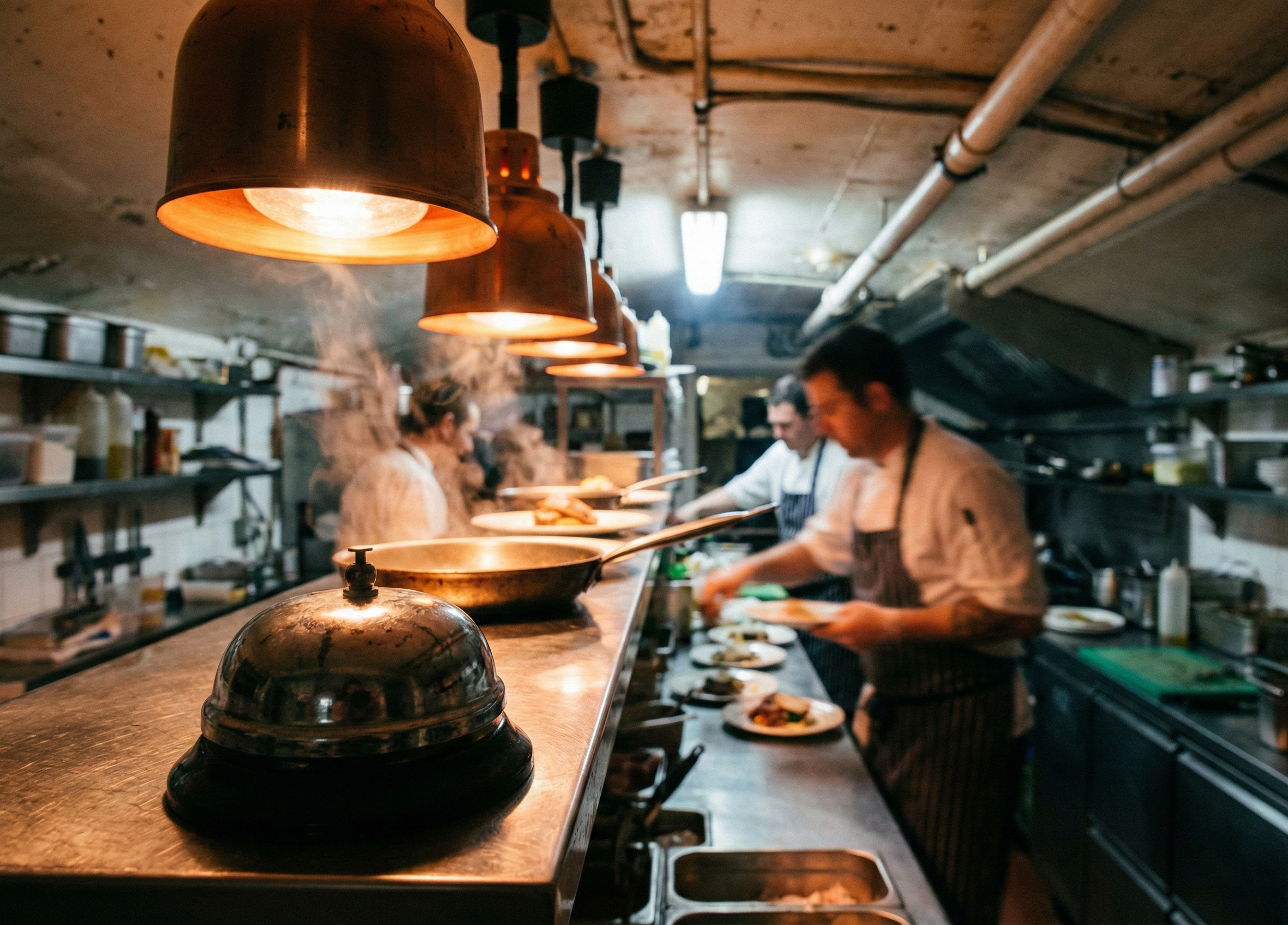
The first night I worked in a French brigade, service began at 19:00 sharp. Our chef had been a pupil of the legendary Paul Bocuse, part of a direct culinary lineage that carried itself like a quiet threat. The kitchen was in a basement at canal level, almost underwater, and I had been working my mise en place since 14:00. No speech. No ceremony. Just heat. The pass glowed under the lamps, pans snapped against burners, and someone shouted “Oui, chef” every few seconds like a metronome.
I remember looking at my cutting board, trying to reconcile the world I had just entered with the one I had come from. It was my first job, fresh out of Le Cordon Bleu. In a previous life, at art school, the studio was elastic. Time stretched. Failure was reframed. If something didn’t work, you could reposition it conceptually. Language could rescue almost anything. In this kitchen, language was irrelevant.
The sauce either held or it split. The knife cut clean, or it bruised the herbs. The Maitre did not care how inspired you felt. He came into the kitchen, dictated the order, and moved forward regardless. Chef replied, “Oui!” and we all replied, “Oui, chef.” At first, I resisted the hierarchy. The repetition felt mechanical. Why cut brunoise again and again? Why clarify the same stock every day? It seemed like discipline was suppressing creativity rather than enabling it. Then came a Saturday night in Amsterdam when we were deep in the weeds. Orders stacked. Tickets multiplied. The air was thick with steam and urgency.
And yet — something surprising happened. My station was calm. Not emotionally calm. Operationally calm. Every container was labeled. Every garnish prepped. My mise en place was exact. My hands moved without hesitation because they had performed the same motions hundreds of times before. While chaos unfolded around me, my discipline absorbed it. I was impeccable.
Later that night, after service, I found myself sitting alone at a bar with a beer, still smelling faintly of stock and smoke. I understood something I had never learned in the studio: Freedom is not the absence of structure. It is the reward for building it. In artistic practice, we often romanticize openness — the blank canvas, limitless possibility. In the culinary world, young cooks romanticize creativity — signature dishes, expression, innovation. Both fantasies ignore the same truth: without scaffolding, there is nothing to stand on. Creativity without discipline is noise. Discipline without creativity is soulless labor.
But when they align, something powerful happens. You can think clearly inside intensity. You can improvise because the fundamentals are internalized. Your voice remains intact even when pressure rises. For the serious cook who believes that breaking routine requires more freedom, I would suggest the opposite. Sharpen your knife properly. Label your containers. Repeat your fundamentals until they become muscle memory. Then watch what happens.
At the artist atelier, we call this tension "process." Between everything that your mind tells you seems possible, and what you actually have achieved. That tension is not something to resolve. It is something to inhabit. Structure does not cage you. It steadies you. It removes friction. It allows your creative instinct to function when it matters most — not in ideal conditions, but under heat. The brigade did not take away my artistic voice. It gave it endurance.